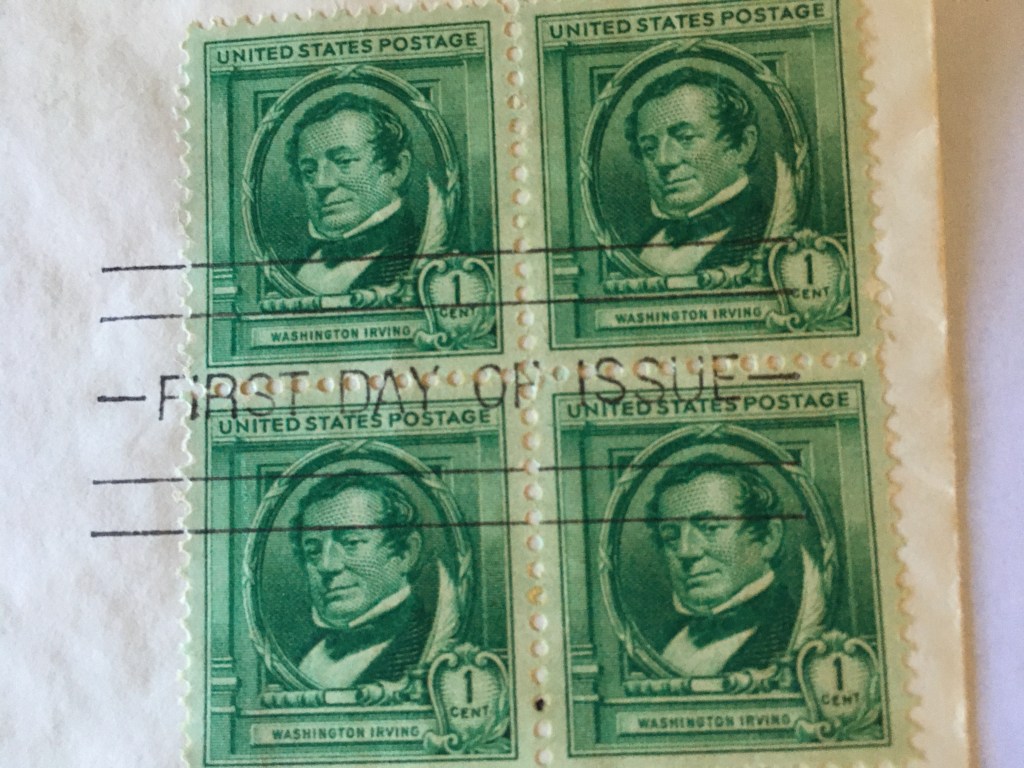
F.SCOTT FITZGERALD'S THEORY OF WRITING

"My theory of writing I can sum up in one
sentence. An author ought to write for the
youth of his own generation, the critics of
the next, and the schoolmasters of ever after.'

Fitzgerald in a letter to the Booksellers
Convention (April 1921) --quoted in Oxford
Dictionary of Twentieth Century Quotations
**
TWO RECOMMENDATIONS FOR STUDENTS OF WRITING

For the study of great opening lines in literature,
Compiled by Dr. Mardy Grothe
https://greatopeninglines.com/
*
THE DOCUMENTARY "PACIFIC LIGHT"--a film about the
poet and essayist DAVID MASON.  Well worth spending
time with. A visual treat of underwater photography
and a well-thought interview on life near the Pacific
Ocean and one man's life dedicated to the craft of
writing and the power of poetry:

PACIFIC LIGHT
Available free on Vimeo:
https://vimeo.com/746745055
**
THE BEST PART OF WRITING NOVEL

PETER WILD: What is your favourite part of the
writing process?

JULIAN BARNES:  “I think that favourite point is when
you are about a quarter of the way into the first draft
and you think – Yes, there is a novel here, and yes,
I have got a pretty rough idea of where it’s going
and how long it will be and how long it will take,
and I’ve got this rich and wonderful period of work
ahead of me. Then you get to the end of the first
draft and that’s when the real work has to begin.”

Peter Wild. From Bookmunch.co.uk (June 3, 2020)
**

JULIAN BARNES

Julian Barnes
Earns
A good money by writing prose.
A successful author. Alas! I am not one of those.

**
WRITING ABOUT MONEY
Dear Editors:

Poet and novelist Erika L. Sanchez "wishes more authors
would write about money." I wonder how authors are
expected to write about something they see so little of?
In a New York Times article some years back: "According
to the survey results, the median pay for full-time
writers was $20,300 in 2017, and that number decreased
 to $6,080 when part-time writers were considered. "
    I doubt that the income of writers is much better
today.

Sincerely,
Louis Phillips

From letters in The New York Times Sunday Book Review
(July 24, 2022)
**
ONE REASON WRITERS WRITE

“The compulsion to be witnessed is one reason writers
 write. We lay out the stories that make up a life and
 ask others to behold the pattern that results. The
stories may be different for each of us, but the
patterns reveal what we have in common as human beings.
What a vital sense of connection both writer and reader
get out of the experience.”

Mary Laura Philpott. “Viral Load” in The New
York Times Sunday Book Review (August 7, 2022)
**
WHY SOME WRITERS WRITE

"She (ELIZABETH HARDWICK) told our class that
there were really only two reasons to write:
desperation or revenge."

Darryl Pinckney. "Critical Distance" in The New
Yorker (September 19, 2022)
**

WHAT SOME WRITERS STRIVE FOR

“A writer strives to express a universal truth in
the best possible way that he can; in the way that
rings the most bells in the shortest amount of time.
 He knows that he can’t live forever and that each
work might be his last and also that the next time
he may succeed in achieving his goal. It is almost
like trying to write the Lord’s Prayer on the head
of a pin. It is an attempt to reduce all of emotional
capacities of the human heart to a phrase.”

William Faulkner. “Insight to Faulkner” by Dianne Best
In Writer’s Digest (May 1962)

**
ADVICE FOR PLAYWRIGHTS

Neil Simon’s memoir Rewrites contains numerous insights
Into the art and craft of writing plays. Hence, his book
 should be required reading for aspiring playwrights.
Here are 3 examples from Rewrites:

l) “You don’t make characters exit to clear the stage.
They have to have a life of their own offstage. When
they come back, we want to know where they’ve been,
and why they came back when they did and not some
other time.”
                         Reginald Rose

2).  “Some of your characters never meet. They must
have a scene with each other so that their characters
and lives connect. Draw their names in a circle and
then draw a straight line from each character to the
other, so that they all eventually criss-cross in the
 play. It doesn’t hold true of all plays, but you’ll
find it pretty much true in most good plays.”
                     Billy Friedberg

3) “Do you have to like every character in a play?”
     “No. Just in comedy.”
     “Why?”
     “Because if we don’t like him, we don’t root for him.”*
                         Herman Shumlin

Neil Simon. Rewrites

**

CAPTURING THE SPEECH OF CHARACTERS

“The ability of a writer to capture the speech of
his character is often underestimated or even dismissed
in favor of other qualities,  but in  fact it is
far more important than subject matter or theme if
the stories are to have life. Buffon said, “Le style
est l’homme mene,” and it follows that the writer
who has captured his character’s voice has taken
hold of the character himself, and the story starts
from there.”

Frank MacShane. Collected Stories of John  O’Hara
(New York:\Viking Books, 1984.)

BRIEF LITERARY NOTE
ABOUT LEARNING HOW
TO WRITE WITH GRACE
& STYLE

After reading Eric Ambler,
Many writers shd feel much humbler.

LJP
 PhillipsMiscellany
Yes I was familiar w/the Fitzgerald ! But thanx
LikeLike
Not sure whether it’s desperation or revenge that motivates you, but keep on keeping on!
LikeLike
Beautiful, beautiful, wonderfulul, important, significant stuff – thanks so very very much. Louis, for,Bits and Pieces. Should be collect3d, published – I’ll buy!
LikeLike
THANK YOU FLOR BEING A GENEROUS & SUPPORTIVE READER.
LikeLike