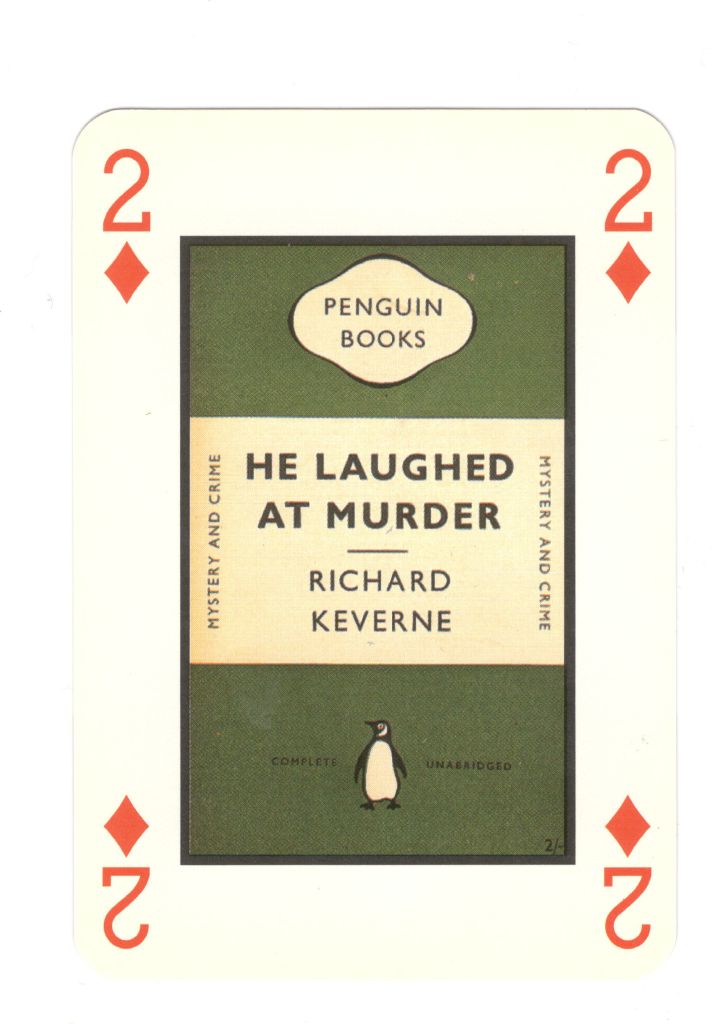
DASHIELL HAMMETT & NICKY ARNSTEIN & OSCAR LEVANT
Nicky Arnstein, Fanny’s (BRICE) first husband, was once being sought
unsuccessfully by the police and was discovered – by the great Dashiell
Hammett – marching in a St. Patrick’s Day parade in New York; it was a
n unlikely place for a man of his ethnic origins to be. Dash Hammett
told me the story himself. Hammett was a Pinkerton detective at that time,
before he took on his successful literary career. In one of his early novels ,
he named aPiano-playing character after me, anagramming my name as Levi Oscant.
Oscar Levant. The Memoirs of an Amnesiac. (New York: G.P. Putnam’s Sons, l965)
**
ON EMBEZZLEMENT
‘Servants and others were thus able to steal with impunity goods entrusted
to them by their masters. A statute of Henry VIII. (1529) was passed to meet
this case; and it enacted that it should be felony in servants to convert to their
own use caskets, jewels, money, goods or chattels delivered to them by
their masters. [Encyclopaedia Britannica, 1910]
quoted in The Online Etymological Dictionary
**
ON THE THIN MAN (1934)
MGM was advised that some dialogue was “censorable,” such as
William Powell‘s line “He didn’t come anywhere near my tabloids,” and
Myrna Loy‘s line “What’s that man doing in my drawers?” However, the
picture was approved for exhibition in 1934 and granted a PCA certificate i
n August 1935. After the film’s release, some territories did censor some
lines of dialogue, and at least one theater owner from the South wrote
to the PCA to complain of excessive drinking in the picture, which his
patrons found offensive.
from IMDb trivia–THE THIN MAN
THE BIRTH OF CHARLIE CHAN
While en route to the Berkshires, his usual summer hideout, (EARL DERR) Biggers stopped by the cavernous New  York Public Library to do some reading and refresh his memories of Hawaii.
It was in the Reading Room. while browsing through a big pile
of Hawaiian newspapers, that Biggers supposedly came across the
name of Chang Apana: "In an obscure corner of an inside page,
I found an item to the effect that a certain hapless Chinese,
being too fond of opium, had been arrested by Sergeant Chang
Apana and Lee Fook, of the Honolulu Police. So Sergeant
Charlie Chan entered the story of The House Without a Key."*

Yunte Huang.Charlie Chan: The Untold Story of the
Honorable Detective and His Rendevous with American
History (New York: W.W. Norton & Company, 2010)

* The mystery of the creation of Charlie Chan deepens a bit because Yunte Huang was not able to locate in Hawaiian newspapers of 1924 the news item remembered by Biggers.
The Honolulu police Dept. has stated that there is no
record of Lee Fook of being a police officer with that
Department. If Biggers had read earlier editions of the'
Hawaii newpapers, he could not have done it at the NYPL
because that library did not subscribe to Hawaiian newspapers before 1924. Writers are notorious deceivers when explaining
the workings of their imaginations. What is not in doubt is
that Chang Apana was the inspiration for Charlie Chan.

**
BILK -- "A cheat or to cheat, not often encouraged
as a noun nowadays but a fighting word in some circles
a century or so ago. From a report on a visit to the
western territories after the Civil War: "...the most
degrading  epithet that one can apply to another is
to pronounce him 'a bilk.' No western man will fail
to resent such concentrated vituperation. "...the term
is an old one, included in the cheating sense in the
first edition'(1785)of A Classical Edition of the
Vulgar Tongue by  Captain  Francis Gross,who noted
that 'Bilking a coachman, a box-keeper, and a poor whore,
were formerly among men of the town, though 'gallant actions.' The word's origin is uncertain, but the best guess is that it is an alteration of balk. It appears first (OED, 1651), a
term in cribbage, meaning to balk or spoil an opponent's
score by consigning relatively unusable
cards to the ark."

Hugh Rawson. Wicked Words. (New York: Crown Publishers,1989).
ON TECHNIQUE IN WRITING MYSTERIES & OTHER NOVELS
"Incidentally, I found out that the trickiest
part of your technique was the ability to put
over situations which verged on the implausible
but which in the reading seemed quite real. I
hope you understand that I mean this as a
compliment. I have never come near doing it
myself. Dumas had this quality in a very
strong degree. Also Dickens.

Raymond Chandler, in a letter to Erle Stanley
Gardner (5 May 1939). The Raymond Chandler
Papers, edited by Tom Hiney and Frank
MacShane (New York: Atlantic Monthly Press, 2000)


More good stuff!
LikeLike
This is being emailed in error; I am NOT Richard. Kindly remove this email address from your mailing list.
Thank you!
LikeLike
Great. Thank you, Louis.
LikeLike
No one can charge Phillips with bilking his readers!
LikeLike