
THE MOST URGENT QUESTION FOR A WRITER
The most urgent question for a writer may seem to be, What experiences do I have as my material, what experiences do I feel able tonarrate? But that’s not right. The most pressing question is, What is the word, what is the rhythm of the sentence, what tone best suits the things I know.
Elena Ferrante in The Paris Review (Spring 2015)
**
JOHN Le CARRE

John Le Carre,
Reading Sister Carrie,
Wondered if his agent Smiley was wiser
Than many characters created by Theodore Dreiser?
**
I think the catalyst for a book is when the writer runs out of money.
Richard Gid Powers
HOW GROWING OLD AFFECTS CHARACTERS IN LITERATURE
The Two Musketeers
Little Adult Women
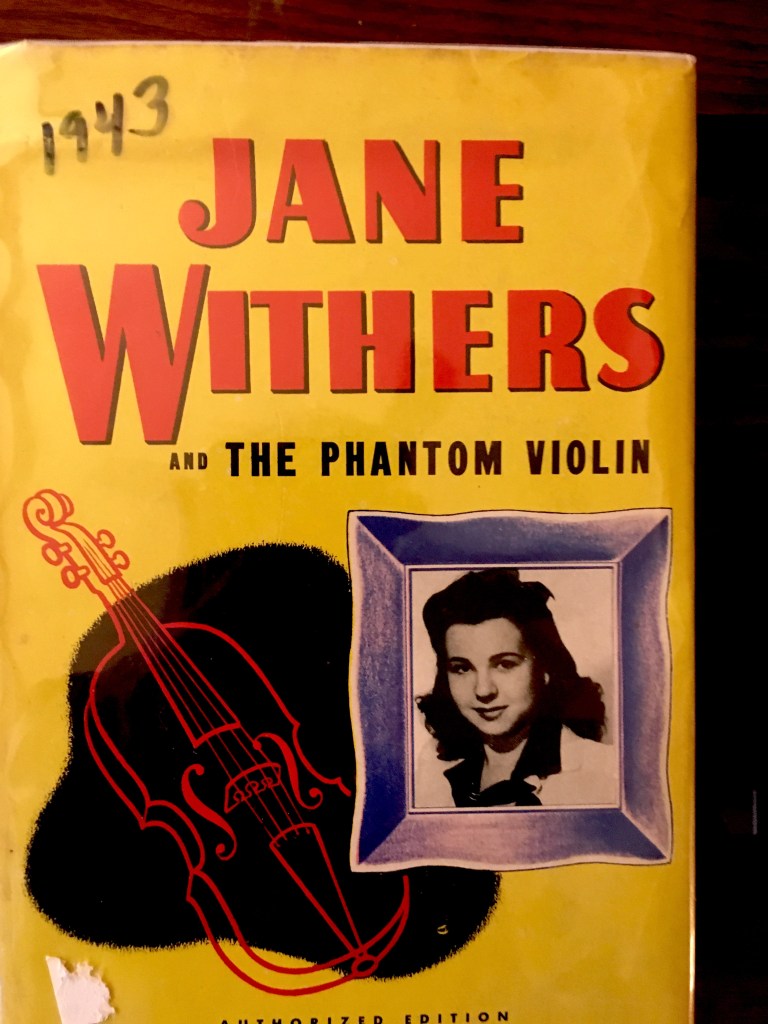
Tom Swift R.I.P.
**
OF POETS & NOVELISTS
“I’m a failed poet. Maybe every novelist wants to write poetry first, finds he can’t, and then tries the short story, which is the most demanding form after poetry. And, failing at that, only then does he take up novel writing.”
William Faukner. Interviewed by Jein Stein vanden Heuvel in Writers at Work: The Paris Review Interviews, edited by Malcolm Cowley (New York: A Viking Compass Book, 1959)
**
LIVING WITHIN THE STORY WE TELL ABOUT OUR LIVES
“I believe most of us tell a story about our lives and then come to live within that story. You can’t know who you are unless you know how to tell a coherent story about yourself. You can know what to do next only if you know what story you are a part of. ‘A man is always a teller oc tales,’ the philosopher Jean-Paul Sartre observed.’ ‘He lives surrounded by his stories and the stories of others, he sees everything that happens to him through them, and he tries to live his own life as if he were telling a story.”
David Brooks.”A Theory of Musk’s Maniacal Drive” in The New York Times (September 22, 2023), p. A24.
**
Dogs wag their tails, but tales wag the world.
*
BILLY WILDER ON THE WRITING OF LOVE STORIES
“And now we have Billy Wilder’s famous dictum posed as a Talmudic question, in re love stories: What keeps them apart?”
David Mamet. Bambi versus Godzilla (NY: Pantheon Books, 2007)
**
HOW GROWING OLD AFFECTS CHARACTERS IN
LITERATURE
The Two Musketeers
Little Adult Women
Tom Swift R.I.P.
**
NASA’s Million-Dollar Typo
“On July 22, 1962, NASA’s Mariner 1 spacecraft, designed for a mission to Venus, was set to launch from Cape Canaveral. But just minutes after liftoff, the shuttle had to be destroyed due to a course deviation. The culprit behind this mission-ending error was a simple coding mistake. While it’s been widely reported that a missing hyphen in the software coding was to blame, NASA has said that it was an “omission of an overbar for the symbol R for radius (R instead of R̅) in an equation,” as well as a guidance antenna on the atlas, that caused the failure. Mariner 1 was set to be America’s first interplanetary probe. It set NASA back $18.5 million (over $180 million today), an amount that led 2001: A Space Odyssey author Arthur C. Clarke to call it “the most expensive hyphen in history.” Just 36 days later, Mariner 2 successfully launched and flew by Venus, becoming humankind’s first successful scientific planetary mission.”
HISTORY FACTS (October 19, 2024)
EPIGRAPH
This book was written in those long hours I spent waiting for my wife to get dressed to goout. And if she had never gotten dressed at all, this book would never have been written.
Epigraph to Groucho Marx’s Memoirs of a Mangy Lover (New York: Bernard Geiss Associates, 1963)
**
Paradise Lost is a book that, once put down, is very hard to pick up again.
“George Orwell’s wife was a nasty snitch. The launch party for ‘Lolita’ was nearly a flop when censors threatened to spoil the fun. Saul Bellow was a needy fusspot. Mick Jagger could not tell a story. The biologist James Watson could, but he expressed such misogyny that readers, even in the 1960s, were alarmed. The anecdotes pile up in a new biograpy of George Weidenfeld, the founder of Weidenfeld & Nicolson, a publisher”
unsigned review of The Maverick: George Weidenfeld and the Golden Age of Publishing. in The Economist (September 23rd,2023)
**ON THE EXCLAMATION POINT !
| “punctuation didn’t really get its start until the invention of the printing press standardized certain practices. Before that, a few scribes from the late Middle Ages used the interjection “io” at the end of sentences to indicate joy, or more generally, surprise or excitement. Like a lot of other things that were rolled out with positive associations, io got tied to a lot of other extreme emotions, but not before it started getting condensed into a sign that was less and less easy to parse as a pair of letters:” T. Campbell. Email post. May 9, 2024 |
SQUINK
I have spent most of my life
Speaking off camera,
Outside the frame,
Outside of somebody's world.

Where do our words go?
Inside & outside
Of houses, offices, school rooms,
The entire menagerie

Of verbal kingdoms. What is it
We wish to say?
Allow me into your lives,
If only for a small wedge,

A squink of revelation.
We are all drowning
In misunderstandings,
Squinks of the word HELP!

Balooning from our mouths.

Louis Phillips


 PhillipsMiscellany