GERTRUDE STEIN
“…motor automatism (IS) comparable to the way a
water-diving twig seems suddenly to twist in the
fingers. The young Gertrude Stein, when still a
student at Radcliffe, researched this condition
of ‘divided consciousness,’ in which one read
aloud while resting a hand on a planchette
(something like the Ouija glass equipped with
a pencil), which performed ‘automatic ‘ writing.”
Neal Ascherson. “Grand Illusion” in The New York of Books (December 2, 2021)
**
BEATRICE LILLIE
Very early in World War II, Beatrice Lillie’s
only son Robert Peele was killed when the Japanese
bombed his ship when it was anchored in Colombo,
Ceylon.
“…she sought aid from psychics and mediums by
attending seances, hoping for some encouraging sign.
On one occasion, a psychic referred over and over
again to a ‘platter’ : ‘Your son sent you a platter
of some kind.’
Bea left in a rage, tearfully grumbling that
this could have nothing to do with her son. But
months later a package arrived from South America.
In it was a platter Bobbie had sent when his ship
anchored there.”
Bruce Laffey. Beatrice Lillie: The Funniest Woman in
The World (New York: Wynwood Press, 1989)
**
JUNE HAVOC
“When I was four years old my billing read “Dainty
Baby June the Darling of Vaudeville,” then in
smaller letters “Reg. U.S. Pat Off.” I had worked
hard toward that billing since I was two.”
“Old Vaudevillians, Where Are You Now?” In Horizon
(July,1959)
**
ELEANOR ABBOT
“The polio epidemic of the 1940s prompted Eleanor
Abbot to create a game for children to play in
quarantine. Its name: Candy Land.”
Emily Goodman. “Boredom-Busting Facts About Board
Games” in Reader’s Digest (Large Print)
(December 2021 + January 2022)
**
MADELEIN L’ENGLE
In The New Yorker for April 12, 2004, Cynthia
Zarin contributed a long profile of Madelein
L’Engle in which it was noted that “On West
End Avenue, piled of paperback mysteries teeter
by L’Engle’s bed. She’ll read any mystery, unless
she knows that the plot revolves around a dead
child.”
**
LILLIAN HELLMANIs the movie Julia a true story?
“The story of a friendship between two women and
their anti-Nazi efforts during World War II.
though purportedly a true story about Lillian
Hellman, her involvement was proved to be untrue
by the actual Julia after the film came out.”
Internet..
**
Gladys Maude Winifred Mitchell
Gladys Maude Winifred Mitchell (21 April 1901 –
27 July 1983) was an English author best known
for her creation of Mrs Bradley, the heroine of
66 detective novels. She also wrote under the
pseudonyms Stephen Hockaby and Malcolm Torrie.
Fêted during her life (called "the Great Gladys"
by Philip Larkin), her work has been largely
neglected in the decades since her death.
Wikipedia
**
JOAN DIDION (& Andrew Marvell)
“I’m not telling you to make the world better
because I don’t think that progress is necessarily
part of the package. I’m just telling you to
live in it. Not just to endure it, not just to
suffer it, not just to pass through it, but to
live in it. To try to get the picture. To live
recklessly. To take chances. To make your own
work and take pride in it. To seize the moment.
And if you ask me why you should bother to do
that. I could tell you that the grave’s a fine
and private place, but none I think do there
embrace. Nor do they sing there, or their children.
And that’s what there is to do and get it while
you can and good luck at it.”
Joan Didion, quoted by Parul Sergal in The New
York Times (December 24, 2021)
**
HERBERT STOTHART (September 11, 1885 – February 1, 1949)
The year 1929 marked the end of the era of silent films. Shortly after completing his latest musical Golden Dawn with Emmerich Kálmán, Oscar Hammerstein, and Otto Harbach, Stothart received an invitation from Louis B. Mayer to move to Hollywood, which he accepted. In 1929, Stothart was signed to a large
MGM contract.
The next twenty years of his life were spent at
MGM Studios, where he was part of elite group
of Hollywood composers. Among the many films that
he worked on was the famous 1936 version of Rose-Marie,
starring Jeanette MacDonald and Nelson Eddy. He
conducted and wrote songs and scores for the films
The Cuban Love Song, The Good Earth, Romeo and Juliet,
Mutiny on the Bounty, Mrs. Miniver, The Green Years
and The Picture of Dorian Gray. His output included
the Marx Brothers' Night at the Opera, the Leo Tolstoy
romantic drama Anna Karenina, two Charles Dickens
dramas (A Tale of Two Cities and David Copperfield),
and Mutiny on the Bounty, which earned him his
first Academy Award nomination. He won an Oscar
for his musical score for the 1939 film The Wizard of Oz.
**
RONALD REAGAN
“Ask him what time it is and he’ll tell you
how the watch
was made.”
Jane Wyman
**
JACK WEBB
Jack Webb --
Reputations of actors ebb
& flow. Reputations of writers flow
& ebb. Please do not ask me how I know.
LJP
ON THE SPLAYED FINGERS “LIVE LONG AND PROSPER” VULCAN
GREETING USED BY SPOCK ON THE FAMOUS STAR TREK SERIES


‘”It is derived from part of a Hebrew blessing that
 Leonard Nimoy
 first glimpsed at an Orthodox Jewish
synagogue in Boston as a
 boy and brought to the role.”

Adam Nagourney. “Jewish Roots of ‘Star Trek’ Are
Explored by Exhibition” in The New York Times
(January 5th, 2022)
*

From the artist Sanford Wurmfeld

Hey Louis,
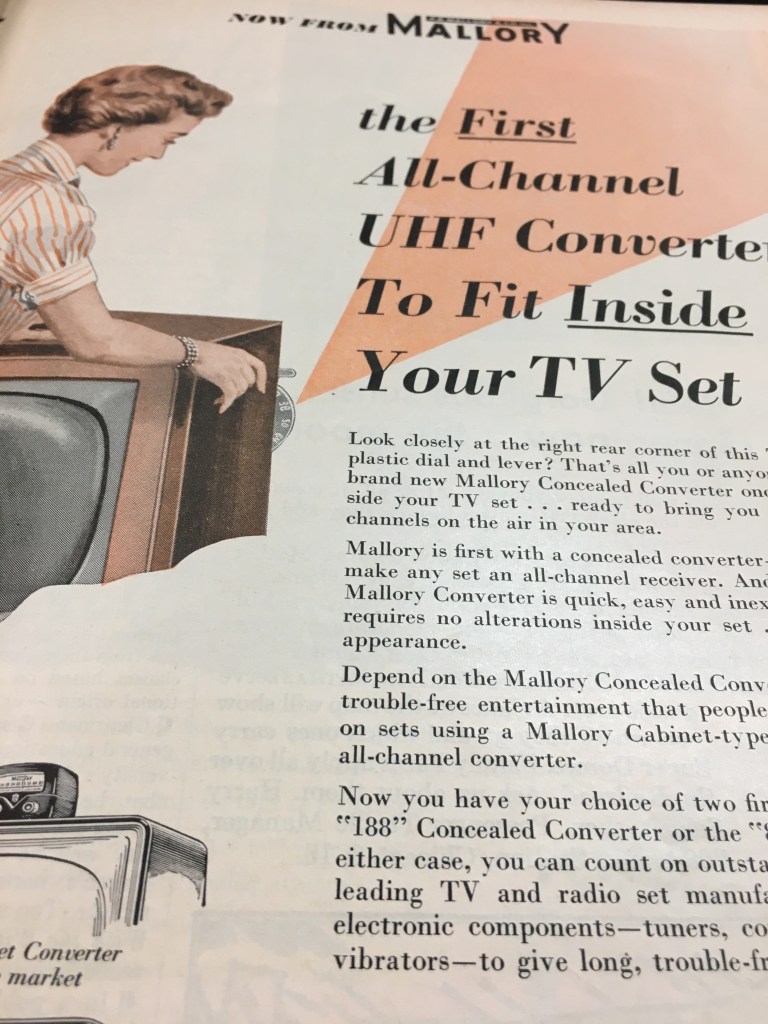
I remember we were the first in the neighborhood in
the Bronx to have a tv. I believe it was about 1948.
It was a small screen with an odd shape in a yellow
mahogany cabinet. The shape of the screen I think
was a round cathode ray tube flattened at the top
and bottom - by that I mean there was a horizontal
straight edge to the screen top and bottom.
Of course it was black and white.  There was a big
magnifier that came with it on a stand placed in front
to make the picture larger, but we all found that more
annoying than helpful.  Much of the day was just a
screen signal.  But then magically at some point in
the evening it would come alive and a program would be introduced - Ralph Bellamy as a private eye.  Also on
Tuesday night the big event was Milton Berle.
That changed everything.  I was even allowed to stay
up and watch.  A big deal at 6.
Best
Sandy
**

from Rella Stuart-Hunt Wurmfeld, Artist & Educator

Thanks Louis. We acquired a television in 1955 in England ostensibly for our German nanny after my little sister
was born because she said ‘there was nothing to do in the
evenings’ and it would help her to learn the language. I remember thinking Phil Silvers was funny and my father
enjoyed Maverick. (Shades of our low-brow evening
entertainment if I wasn’t reading fairy tales)

**


THE FIRST NATIONAL TELEVISION SPONSOR

The first television national sponsor in the world
was GILLETTE, on June 19, 1946, when it sponsored
the boxing match between Joe Louis and Billy Conn.

The Guinness Book of TV Facts and Feats (1984)

**
SIR LAURENCE OLIVIER & TELEVISION COMMERCIALS

“Sometimes I think I’ll not be remembered for Hamlet
nor Richard III. Nor even for Wuthering Heights.
Sometimes I think a whole generation of youngsters
will know me only as ‘that man who did Polaroid
commercials.”

            Laurence Olivier

**

EARLY TELEVISION HISTORY

“For the record I made my  television debut in
Chicago in 1929. Trixie Friganza and I had been
asked to appear by F.A. Sanabria, who owned the
United States Television Corporation. It was
one of the early closed-circuit experiments.
Things like writers didn’t exist then. My instructions
were to do eight minutes and keep it clean, and
don’t move around too much. Of the actual broadcast,
all I can remember is a small room and fierce heat
from the lights and the heavy make-up we had to wear.
We were part of history, but I don’t think either
of us made history. The broadcast was sent out to
maybe twelve people in Sanabria’s company who had sets.”

Milton Berle. Milton Berle: An Autobiography with
Haskel Frankel. (New York: Delacorte Press, 1974)

**
MACBETH ON 1955 TELEVISION

“We’re doing Macbeth on a sex basis. I’m playing a
slut (Lily Macbeth), Joe Macbeth (Paul Douglas) is
a gangster who turns yellow and leaves the killing
up to Lily. I’ll do it with a revolver. We thought
a knife would be too bloody.”
                           Ruth Roman
**

COLUMBUS MAY NOT HAVE DISCOVERED AMERICA
BUT AMERICA DISCOVERED COLUMBO

“It became clearly evident during rehearsals  that
the plot of the play did not concern a doctor who
murdered his wife and was subsequently apprehended
by a bumbling detective. Rather it concerned a
bumbling detective *who put together sufficient
evidence to convict a murderer who happened to be
a doctor. The detective’s name was Columbo. In
later years, Peter Falk would don the same
wrinkled trench coat and play to more viewers
in one night than our Rx: Murder tour could
attract in fifty years, instead of a
fifty-week run.”

* Thomas Mitchell was the first actor on stage
to portray Columbo.

Joseph Cotton. Vanity Will Get  You Somewhere (San Francisco:Mercury  House, 1987)
**
"Never put off until tomorrow what you can do today
-- for tomorrow's gonna be bad enough as it is."
                      George Gobel

GEORGE GOBEL

 George Gobel
 At Yankee Stadium never had a bobble
 Doll night.
 I don’t know. Does that seem right?

LJP
COAL

“Not all coal is the same. The lowest ranks –the
closest to peat—are lignite and the sub-bituminous
coal, known in Britain  as brown coal.  These have
been estimated to make up nearly a third of proved
global reserves, but are not much exploited in areas
where higher-grade coal is available, because they
produce a lot of  smoke and relatively little heat
(they are also difficult to transport  and store, not
least because they can spontaneously combust).”

Florence Sutcliffe-Braithwaite. “Tesco and a Motorway”
In London Review of Books (9 September 2021)

**
A CHUNK OF WOOD

Dorothy Kilgallen’s “dad also won Dorothy’s heart by
bringing a chunk of wood from actor Rudolf Valentino’s
coffin. Jim had carved the letters ‘DMK’ on it.”

Mark Shaw. The Reporter Who Knew Too  Much
(Franklin, TN: Post Hill Press, 2016)

**


COATS & A JACKET

“(JIMMY) Durante came out in a raccoon coat and
a hat pulled down over his forehead. ‘ Take off your
hat and coat and awhile,’ Jackson called. Durante
pulled off the raccoon coat ], and under it was
another fur coat. When he took this off, there was
another fur coat. When this one was pulled off,
there was still another coat. Durante got that
one off and now was in a full dress coat, which
he tugged off and showed that he still had on a
dinner jacket.
  ‘Did you expect a storm?’  Jackson called from
 a chair.
   ‘I didn’t expect it. I brought it with me.’”

Jimmy Breslin. Damon Runyon: A Life (New York:
Ticknor & Fields, 1991)

**

ON THE PAPER  AND OIL-BASSED INK THAT THE LONDON
REVIEW USED TO PRINT ITS UK ISSUES


“A forty-page issue requires eight metric tonnes
of paper, shipped from Finland in rolls nearly two
metres wide, to fulfill just the UK part of the
print run (roughly 55,000 copies, about 60 per
cent of the total) . The oil-based ink is fixed
onto the paper by spraying it with water and running
it through vast ovens, a process known as heat-setting.
Instead of drying, the ink sets
Like cooling wax. After that the paper is flung
four metres up onto air-blowing rollers to dry,
then it’s cut and the magazine assembled.”

Malin Hay. “Paper Cuts” in The London Review of Books
(24 March 2022)

**

GETTING TO THE POINT

“A nib is not a pen – not even a steel pen – though
the word is often used in that sense: it is the point
of a pen. Nevertheless, the word ‘nib’ takes us back
to the very beginning of writing, the invention of
which was ascribed by the ancient Egyptians to the
God Thoth. He was the scribe of the gods and was typified on earth by the sacred Ibis, the bird which stood on the river flats writing mystic signs on the
smooth mud with his long pointed beak. And this beak
may rightly be called a ‘nib,’ for the word ‘nib’ is the
same as ‘neb,’ which means a beak.”

Basil Hargrave. Origins and Meanings of Popular
Phrases & Names (London: T. Werner Laurie Ltd.,
MCMXXV

ON FLIP BOOKS

"The oldest known documentation of the flip book
appeared on 18 March 1868, when it was patented
by John Barnes Linnett under the name Kineograph
 ("moving picture"). They were the first form of
animation to employ a linear sequence of images
rather than circular (as in the older phenakistoscope).
 The German film pioneer, Max Skladanowsky, first
exhibited his serial photographic images in flip
 book form in 1894, as he and his brother Emil did
not develop their own film projector until the
following year. In 1894, Herman Casler invented
a mechanized form of flip book called the Mutoscope,
which mounted the pages on a central rotating
cylinder rather than binding them in a book.
The mutoscope remained a popular attraction
through the mid-twentieth century, appearing
as coin-operated machines in penny arcades and
amusement parks. In 1897, the English filmmaker
 Henry William Short marketed his "Filoscope",
which was a flip book placed in a metal holder to
facilitate flipping.
By 1948, an "automated multiple camera" for the
production of "Pocket Movie flip book" portraits
was marketed in the USA.This was a relatively
early use of the term "flip book" that turned
more common from the 1950s onward."

From WIKIPEDIA

**
DEATH RAYS

"The most spectacular of the proposed application
of electricity was the death ray, a concentrated
beam of electricity that could destroy people.
Vehicles, or structures. H.G.Wells is usually
credited with first imagining the death ray
wielded by the invading Martians in his 1898
War of The Worlds, and may have been inspired
by the discovery of x-rays a few years earlier."

John J. Corn and Brian Hoppigan. "Yesterday's
Tomorrows: Past Visions of the American Future
(The John Hopkins University, 1984)
THE WIZARD OF OZ AND THE RAVEN

“Filming resumed November 4 under Victor Fleming
who would receive the director credit for the film.
Again, the cast began with the cornfield scene.
The ‘crow’ that was to land on Bolger’s shoulder
in the scene was actually a raven named Jimmy.
Although Jimmy was himself a screen veteran, having
acted in more than a thousand films in the 1930’s
he was having a rough day when Fleming got to work.
He got loose on the set and refused to return to
his handlers. The entire soundstage had to be shut down
until he was caught, and nothing else was done that day.”

Holly Van Leuven. Ray Bolger: More Than a Scarecrow
(New York: Oxford University Press, 2019)

**
JUDY GARLAND’S FAVORITE AUTHOR

“ Bolger gave Garland a pristine edition of ‘The Raven’
by Edgar Allan Poe, her favorite author. The gift
served the dual purpose of also being  a gag,
recalling the memories of Jimmy the misbehaving
raven from their cornfield scenes.”

Holly Van Leuven. Ray Bolger: More Than a Scarecrow
(New York: Oxford University Press, 2019)
**

Would the American People be better off if Judy
Garland was the head of the Department of Justice
instead of Merrick?
**

AMONG MANY REASONS TO WATCH MOVIES

“There are many reasons to watch movies, some
better than others. One of the worst reasons
is to learn how to live. I  know that films
won’t provide me with a reliable way to navigate
my emotional difficulties, but I still watch
them in hopes in the hopes they might do so
eventually. Rowland’s work with Cassavetes
tells us, explicitly that everyone in the world
is very screwed up.”

Andrew Key.”Gena Rowlands” in The New York Times
Magazine (February 20, 2022).

**

EDGAR G. ROBINSON DURING WORLD WAR II

             “During World War II, Robinson broadcast
 messages over the BBC to occupied countries in seven
languages: English, French, Romanian, Russian, German,
Polish, and Finnish! When he was asked  to give a
voice level, he did it in a perfect Oxonian accent.
The actor was one only two people ever permitted by
the BBC to smoke a cigar while broadcasting. The
other, of course, was Sir Winston Churchill, England’s
wartime prime minister. After all, where else would
they find a movie star fluent in seven languages.”

Jeffrey Lyons.  Stories My Father Told Me: Notes
from “The Lyons Den” ( New York: Abbeville Press, 2011)
**


OLIVER STONE,IN MOSCOW AND VLADIMIR PUTIN
WATCH DR. STRANGELOVE TOGETHER IN 2017


“As Joseph Heller realized while writing Catch-22,
certain ridiculous truths about war simply can’t
be portrayed non-comedically. As realized through
the painstakingly exact filmmaking of Kubrick and
his collaborators, Dr. Strangelove is the blackest
of black comedies. “There are certain things in
this film that indeed make us think,” Putin says
to Stone after the closing montage of mushroom clouds.
He even credits Kubrick with technical foresight:
“Modern weapon systems have become more sophisticated,
 more complex. But this idea of a retaliatory weapon
and the inability to control such weapon systems still
hold true today.” Not much has changed since the days
of Dr. Strangelove, he admits, and now that he’s
undergone his own bout of geopolitical brazenness,
let’s hope that he remembers how the movie ends.”

OPEN CULTURE : Thu, Mar 17, 2022
**
“There are only three reasons to make a movie, to
make people laugh, to make them cry, or to frighten
them.”

                          William Friedkin
     **
“I felt very much as if I were representing 15,
18 million people with every movie I made.”

 Sidney Poitier

**


FILM NOTE TO AN EASY RIDER
CO-STAR

Dennis Hopper
Cd not be any hipper
Making young audiences happier
By pissing off Hedda Hopper
& perplexing Charles Napier.

**

MICHAEL RENNIE

Michael Rennie –
I wonder if there are any
Other poems about him.
If not, then, this is the only one he’s got.
MARK TWAIN’S LOW OPINION OF JAMES
FENIMORE COOPER’S THE DEERSLAYER


“In one place Deerslayer, and in the restricted space
of two-thirds of a page, Cooper has scored 114 offenses
against literary art out of 115. It breaks the record.”

Mark Twain. How to Tell a Story and other essays
(1897)

See The Book of Lists  by David Wallechinsky and
Amy Wallace (New York: Cannongate, 2005)
**

TALLULAH BANKHEAD & THE FIRST BOOK TO MAKE AN
IMPRESSION UPON HER

“The first book to make an impression
 on me was
Grimm’s Fairy Tales. I was a sponge for Shakespeare’s
poetry. It wasn’t long before I was spouting,
‘Romeo, Romeo!  wherefore art thou,
 Romeo?...Thou knowest the mask of night is on my
face; else would a maiden blush’ and ‘Friends, Romans, countrymen! Lend me your ears. I come to bury Caesar,
not to
praise him…’

Tullalah Bankhead. Tallulah: My Autobiography (NewYork:
Harper & Row, 1952)
**

THE 6½ OLD PETER (PIRA) IN THE NOVEL
THE STONE WORLD by JOEL AGEE

“One of his favorite books was Just So Stories.
Every once in awhile, the person telling the
stories said ‘Best Beloved’ or ‘O Best Beloved,’
and at those moments Pira always felt a special
pleasure, as if he was being addressed in the
 most kind and respectful way imaginable. The way
the words were capitalized made them look even
grander than they sounded. The ‘O’when it came,
was like the bow you make before a king: ‘O
best beloved!”

Joel Agee. The Stone World (Brooklyn:
Melville House, 2020)
**
THE WASP & THE EXTERMINATOR

“ Writers and editors don’t like seeing their
idiosyncrasies in print any more than anyone else
does, and it obviously does no good to point out
to them that putting other people’s idiosyncrasies
into print is how most writers make their livings.
The wasp does not excuse the exterminator because
they’re both in the same business.”

Louis Menand. “A Friend Writes: The Old New Yorker”:
In American  Studies (New York: Farrar, Straus and
Giroux, 2002)

**
ON RECEIVING A BAD REVIEW

“A bad review is even less important than whether
it is raining in Patagonia.”
                           Iris Murdoch

**

FILM DIRECTOR ANG LEE AND THE NOVELIST
WANG DULU

“I’m an admirer of the novelist, Wang Dulu, who wrote
a lot of martial-arts fiction – which was very popular
when I was growing up in Taiwan. Most of the genre is
pulp fiction, but Crouching Tiger was something else:
even though the characters could fly, [the story]
was grounded in reality. Usually, the female characters
[in such tales] are  very passive; here the main woman
is very active and very rebellious. That made it very interesting.”   Ang Lee

David E. Williams. “Enter the Dragon” in American Cinematographer , volume 82, no. 1 (January 2001).
Reprinted in Ang Lee Interviews, edited by Karla
Rae Fuller (Jackson, Mississippi: University of
Mississippi: Press, 2016)

**

TIM O'BRIEN & TRUE WAR STORIES

“In the end,” (TIM)  O’Brien writes, “a true war story
is never about war. It’s about the special way that dawn
spreads out on a river when you know you must cross the
river and march into the mountains and do things you are
afraid to do. It’s about love and memory. It’s about
sorrow. It’s about sisters who never write back and
people who never listen.” It’s about life, the vast
and short and incomprehensible experience that ends
for all of us before we really apprehend its meaning.

 David Mason, "War and Imagination" in THE HUDSON REVIEW
(WINTER 2022)

**

HOW THE WORD POETRY IS OFTEN USED IN CRITICISM

…it is of some help to remember that in the code
language of criticism when a poem is said to be
about poetry the word ‘poetry’  is often used to
 mean: how people construct an intelligibility
out of the randomness they experience; how people
integrate loss and gain; how they distort experience
by wish and dream; how they perceive and consolidate
flashes of harmony; how they (to end a list otherwise
endless) achieve what Keats called a ‘Soul or
Intelligence destined to possess the sense of
identity.“It is worth quoting once more Keats’
description of this world not as a vale of what
he called ‘soul-making.’’

Helen Vendler. “Understanding Ashbery” in The
New Yorker (March 16, 1981)

**

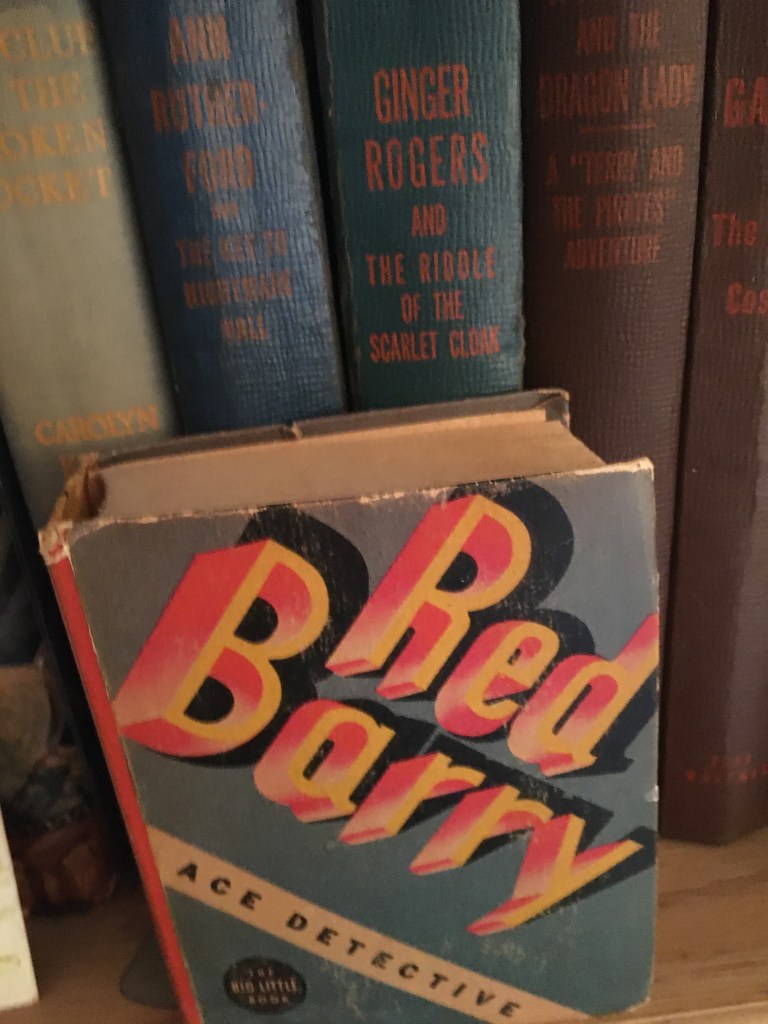
TOM SWIFT & HIS HIS MOTOR CYCLE

For other uses, see Tom Swift (disambiguation).

Tom Swift and His Motor Cycle (1910), the first
Tom Swift book. Tom Swift is the main character
of six series of American juvenile science fiction
and adventure novels that emphasize science,
invention, and technology. First published in 1910,
the series totals more than 100 volumes. The
character was created by Edward Stratemeyer, the
founder of the Stratemeyer Syndicate, a book
packaging firm. Tom's adventures have been
written by various ghostwriters, beginning with
Howard Garis. Most of the books are credited
to then to to the collective pseudonym "Victor
Appleton.
   "Tom Swift has been cited as an inspiration
by various scientists and inventors, including
aircraft designer Kelly Johnson."


from Wikipedia
**
MARK TWAIN’S LOW OPINION OF JAMES FENIMORE COOPER’S THE DEERSLAYER
“In one place Deerslayer, and in the restricted space of two-thirds of a page, Cooper has scored 114 offenses against literary art out of 115. It breaks the record.”
Mark Twain. How to Tell a Story and other essays (1897)
See The Book of Lists by David Wallechinsky and Amy Wallace (New York: Cannongate, 2005) **
TALLULAH BANKHEAD & THE FIRST BOOK TO MAKE AN IMPRESSION UPON HER
“The first book to make an impression on me was Grimm’s Fairy Tales. I was a sponge for Shakespeare’s poetry. It wasn’t long before I was spouting, ‘Romeo, Romeo! wherefore art thou, Romeo?…Thou knowest the mask of night is on my face; else would a maiden blush’ and ‘Friends, Romans, countrymen! Lend me your ears. I come to bury Caesar, not to praise him…’
THE 6½ OLD PETER (PIRA) IN THE NOVEL THE STONE WORLD by JOEL AGEE
“One of his favorite books was Just So Stories. Every once in awhile, the person telling the stories said ‘Best Beloved’ or ‘O Best Beloved,’ and at those moments Pira always felt a special pleasure, as if he was being addressed in the most kind and respectful way imaginable. The way the words were capitalized made them look even grander than they sounded. The ‘O’when it came, was like the bow you make before a king: ‘O best beloved!”
Joel Agee. The Stone World (Brooklyn: Melville House, 2020) ** THE WASP & THE EXTERMINATOR
“ Writers and editors don’t like seeing their idiosyncrasies in print any more than anyone else does, and it obviously does no good to point out to them that putting other people’s idiosyncrasies into print is how most writers make their livings. The wasp does not excuse the exterminator because they’re both in the same business.”
Louis Menand. “A Friend Writes: The Old New Yorker”: In American Studies (New York: Farrar, Straus and Giroux, 2002)
** ON RECEIVING A BAD REVIEW
“A bad review is even less important than whether it is raining in Patagonia.” Iris Murdoch
** FILM DIRECTOR ANG LEE AND THE NOVELIST WANG DULU
“I’m an admirer of the novelist, Wang Dulu, who wrote a lot of martial-arts fiction – which was very popular when I was growing up in Taiwan. Most of the genre is pulp fiction, but Crouching Tiger was something else: even though the characters could fly, [the story] was grounded in reality. Usually, the female characters [in such tales] are very passive; here the main woman is very active and very rebellious. That made it very interesting.” Ang Lee
David E. Williams. “Enter the Dragon” in American Cinematographer , volume 82, no. 1 (January 2001). Reprinted in Ang Lee Interviews, edited by Karla Rae Fuller (Jackson, Mississippi: University of Mississippi: Press, 2016)
**
TIM O’BRIEN & TRUE WAR STORIES
“In the end,” (TIM) O’Brien writes, “a true war story is never about war. It’s about the special way that dawn spreads out on a river when you know you must cross the river and march into the mountains and do things you are afraid to do. It’s about love and memory. It’s about sorrow. It’s about sisters who never write back and people who never listen.” It’s about life, the vast and short and incomprehensible experience that ends for all of us before we really apprehend its meaning.
David Mason, “War and Imagination” in THE HUDSON REVIEW (WINTER 2022)
BACKRONYM

“an acronym deliberately formed from a phrase whose
initial letters spell out a particular word or words,
either to create a memorable name or as a fanciful
explanation of a word's origin.
   "Biodiversity Serving Our Nation, or BISON (a               backronym if ever there was one)"

Oxford Languages

“Many United States Congress bills have backronyms
as their names; examples include the American CARES
Act of 2020, which stands for the Coronavirus Aid,
Relief, and Economic Security Act, the Uniting
and Strengthening America by Providing Appropriate
Tools Required to Intercept and Obstruct Terrorism
(USA PATRIOT) Act ...”

Internet: “What are examples of backronyms”

**

STEPHEN KING’S ZESTFUL CRITICISM OF A STORY
BY MURRAY LEINSTER

When he was in 8th grade, Stephen King read
a story by Murray Leinster which King realized
was badly written, “a story populated  by paper-
thin characters and driven by outlandish plot
developments.  Worst of all (or so it seemed to
me at the time), Leinster had fallen in love with
the word zestful.  Characters watched the approach of
ore-bearing asteroids with zestful smiles. Characters
sat down to supper aboard their mining ship with
zestful anticipation. Near the end of the book, the
hero swept the large-breasted, blonde heroine into
a zestful embrace.  For me, it was the literary
equivalent of a smallpox vaccination. I have never,
so far as I know, used the word zestful in a novel
or story. God willing, I never will.”

Stephen King. On Writing: A Memoir of the Craft
(New York: Pocket Books, 2000)

**

 CHARLES de GAULLE’S BATH

“He would suddenly lean forward and tap the
shoulder of his driver, and order him to stop.
Then he would climb out and walk straight into
the crowd, shaking hands and playing the friend
of the common people. Today it is called “pressing
the flesh,” he called it the bain de foule, the bath
in the crowd.

Frederick Forsyth. The Outsider: My Life in Intrigue.
(New York: G.P. Putnam’s Sons, 2015)

**


FRANK KERMODE ON THE MANX EXPRESSION
“ALWAYS AT THE HEEL OF THE HUNT”

“My mother was quick to notice this trait. “Traa dy
iioaur,” she would say, time enough is your motto.
Always at the heel of the hunt. The Manx expression,
Though variously spelt, is understandable,, for she
had been a farm girl and some Manx still lingered in
the countryside at the beginning of the century; as
late as when I was around you might be given a good-day
in Manx  on country roads and were expected to answer accordingly. But I’ve never heard “the heel of the hunt” anywhere else, and wonder where she can have picked it
up; there are no foxes om the isle of Man, and no word
 for fox in Manx, which puzzled the Bible translators
when they came to the little foxes of the Song of
Songs and several others as well.  Samson alone needed
three hundred of them…”

Frank Kermode. Not Entitled. (New York: Farrar,
Straus and Giroux , 1995.
**

ON THE WORD  GIBBERISH

“The opinion has been advanced that this word is
derived from Geber, the name of an Arabian
alchemist of the eleventh century, because of the
mystical jargon in which he wrote in order to
avoid the penalty – most probably death – which
he would have incurred from the ecclesiastics of
the day had he written openly. It is more likely,
however, the word has been  from the verb ‘to
gibber,’  a variant of ‘jabber,’ which is a
weakened
form of ‘gabber,’ ‘gabble.’ Derived
from the old
 word ‘gab..’

Basil Hargrave. Origins and Meanings of Popular
Phrases & Names (London: T. Werner Laurie Ltd.,
MCMXXV

**


ON VIRTUE & SPIRITS IN LIQUOR

“Old English gave a special meaning to the word
‘virtue’ which does admirably. It meant inherent
strength or active quality, and was used, for example,
for the undiminished potency of well-preserved
medicines and liquors. Virtue as spirit once had
interchangeable meanings—and not only in the
virtue that endowed liquid spirits.”

Erik H. Erikson. Insight and Responsibility: Lectures on
The Ethical Implications of Psychoanalytic Insight
(New York: W. W. Norton & Co. 1964)


**
ON JURISTIC PERSONS

“Those entitled to stage an appearance in the public
realm, the actors as opposed to the chorus are
juristic persons. A slave, the Roman jurists say, has
no persona; the Greek jurists say he is without a face.”

Norman O. Brown. Love’s Body (New York: Random
House,1966)

**
FROM IVAN JOHNSON (ON ITALIAN FOR AGAIN)

“Italians say "Bis"  (beeess).  Which to my ears
always sounded like "Booo".   When I shared that
perception with my Italian friends, they had no
idea what I was talking about. Sounded like Beeeess
to them.  Bis is also used on addresses, like
Via Nizza 12bis; usually a side door or annex.

They have the word ancora (an-CO-ra) but don't use
it for those occasions.   We were treated to a hilarious
use of ancora during an overnight ferryboat ride from
Rome to Sardegna.  Some sailors had picked up some
sweet young things.   In the middle of the night
we heard one pair through the walls -- a female voice
moaned "Ancora. Ancora."    bedsprings squeaking......
..  A couple hours later:  "Ancora, ancora." We saw
a number of sleepy-eyed sailors n girls disembarking
 later that morning.   Couldn't tell which ones were our neighbors.

They also have the word ancora (ANK-ora) which means anchor.”

**

CARNIVAL SLANG

“Carny folk would identify themselves to one
another by
 announcing, “Wee-a-zith”; that is
“With it.”

David Mamet, writing about Ricky Jay
**


THE ORIGIN OF THE NAME FOR THE PRISON SING SING


“I discovered that Sing Sing was no lullaby, that its
 name was derived from the Indian words ‘Sint Sinks,’
a local tribe, a variation of an older term “Ossine Ossine’
meaning stone upon stone.”

Lewis E. Lawes. Twenty Thousand Years in Sing Sing
(1932)


**

About Curtail
This word comes from the obsolete “curtal,” meaning “horse with a docked tail.” This stems from the French “courtault” by way of “court” meaning “short,” and from the Latin “curtus.” The change in the ending was due to association with “tail” and perhaps also with the French “tailler,” meaning “to cut.”

Word Genius site  February 12,  2022
**
TONY PERKINS & THE PLACE HE NEEDED TO ACT FROM
“When I did Catch-22, I worked with Tony Perkins,
who was a delightful, kind, and literate man. For
some reason the moment he appeared before a
camera things became painful for him. Just before
the word ‘action,’ Tony would unfailingly say,
‘Oh God, where did I go wrong.’ It was the place
he worked from. He needed, for whatever reason,
a sense of shame, or discomfort, or self-judgment
that took him to the place he felt he needed to
act from.”*
Alan Arkin. An Improvised Life: a memoir
( Detroit: Thorndike Press, 2011)
*Is it possible that Tony Perkins was simply being
humorously ironic?
FILM REVIEW OF THE DAY OF THE DOLPHIN
“The most expensive Rin Tin Tin picture ever made
with a gimmick the Rin Tin Tin pictures never stooped
to: the dolphins here are dubbed with plaintive,
childhood voices and speak in English.”
“Goings on About Town in The New Yorker (January 7, 1974)
**
ON THE DOLPHINS IN THE DAY OF THE DOLPHIN
“The trained dolphins who played Alpha and Beta were actually named Buck (for screenwriter Buck Henry) and Ginger (for dancer Ginger Rogers). On the next to the last day of filming, when their parts were done, they escaped and never returned.”
IDMB trivia
**
WOODY GUTHRIE ON THE GRAPES OF WRATH
“Seen the pitcher last night ‘Grapes of Wrath,’ best cursed pitcher I ever seen. ‘The Grapes of Wrath’ you know is about us pullin’ out of Oklahoma and Arkansas, and down south and out, and driftin’ around over the state of California, busted, disgusted, down and out, and lookin’ for work.”
**
FROM THE EMMY AWARD WINNING FILMMAKER
NELSON BREEN
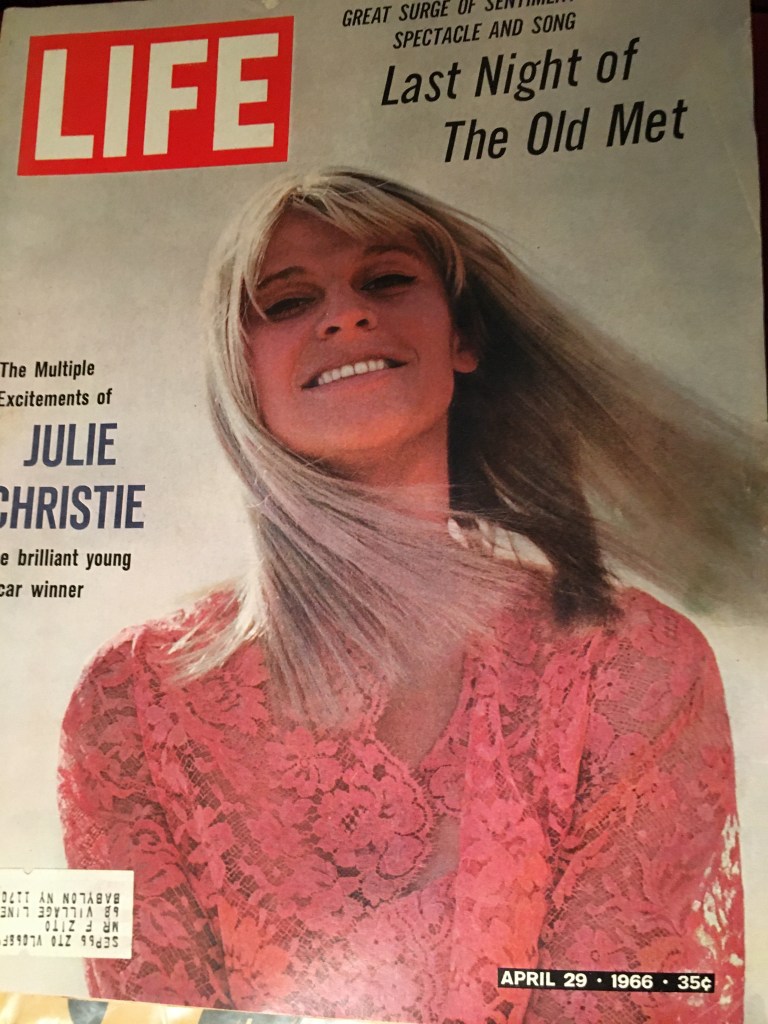
Bless you most of all for the reproduction of the Life cover featuring Julie Christie, (BLOG POST: CELEBRITIES) whom I first met in 1985 in connection with a documentary I wrote and she was going to narrate on refugee women for the UN. She was staying at a friend’s apartment in the Apthorp & she greeted me at the door with a big smile and a blast of exhaled cigarette smoke. “I just quit smoking today,” I said, waving the smoke away with my hand. “Why would you do that?” she asked, taking a deep drag on the Marlboro in her hand, and continuing to chain smoke for the next couple of hours we were together. When I returned home to my wife Dana and infant son, she grimaced & said: “Well, that didn’t last long, did it? I could smell the cigarette smoke on you while you were still outside.”
**
TIPS ON FILM REVIEWING
"I always watch for the caterer but he goes uncredited. Makes a good case study for a film class of how things can go wrong. "
RICHARD GID POWERS
**
MOVIE MAD
Anne Shirley –
Surely
You must have seen her in Murder, My Sweet.
No, you haven’t? Ah well, no sweat.
**
FRANCIS FORD COPPOLA
“… he has made a lot of money: first in the film business and then, spectacularly, in the wine business. His second fortune has allowed him to spend most of his time here now, he said, reading things like the 18th-century Chinese novel Dream of the Red Chamber, one of the longest books ever written. “They spend their time inventing poetic names for things,” Coppola told me about the characters in the novel. “For example, if I were to say hello to you, I should have met you on the Steps of Friendly Greetings and greeted you there. And when I say goodbye to you, I should take you into the Pavilion of Parting. And it's the sort of attitude of making everything in life beautiful and a ritual of a kind. And you can do it! I'll say goodbye to you in the Pavilion of Parting— you'll never forget it.”
BY ZACH BARON
February 17, 2022 in THE GQ online =--gqdtory.com
**
From MURRAY SUIDfounder of MobileMovieMaking Magazine https://mobilemoviemaking.com/about/
I have my own Bogdanovich story. He showed “Targets”
at an American Film Institute conference in 1968—
in Santa Barbara. The majority of attendees hated
the movie and were vocal in their criticism. It was
brutal. Finally, Bogdanovich’s wife Polly Platt
stood up and berated the audience for attacking
her husband. It was a very emotional scene.
Bogdanovich later dumped Polly and married Cybill
Shepherd. I wonder if Polly regretted defending
Peter.
**
KNOW YOUR ENEMY –WWII PROPAGANDAFILM
Skillful American propaganda film from World War II
`Know your enemy Japan' is an American propaganda film from 1945. It was directed by Frank Capra on behalf of the US War Department. The film is made up of sequences from documentaries with narration and music. There are bits that clearly are re-constructions of past events but are presented as though they are real news footage. Animated sequences exist. Walter Huston and Dana Andrews do the narration. The film is 60 minutes long. It was shown to allied soldiers serving in the Pacific region during World War II.
**
ON THE DOCUMENTARY VAL --ABOUT VAL KILMER
"I'm glad to report, is not the better part of Val. Watching this documentary is like having Dorian Gray give you a guided tour of his attic."
Anthony Lane. "Settlers and Val" in The New Yorker (July 26,2021)
**
JOYCE KILMER & VAL KILMER: HOW TO REMEMBER THE DIFFERENCE BETWEEN THE TWO
Joyce Kilmer,
Val Kilme
The first wrote "Trees". The Other one
Co-starred with Tom Cruise in Top Gun.
LJP
FIDEL CASTRO IN A FILM FROM MGM
“Cuban leader Fidel Castro appeared as an extra
in the Hollywood film Bathing Beauty, starring
Esther Williams.”
Ripley’s Believe It or Not Encyclopedia of the Bizarre
(New York: Black Dog & Leventhal Publishers,2002)
**
JAMES BOND FILMS & ELEPHANTS
“The producers of the James Bond pictures have discovered
one of the secrets of circus: if the performing dogs
disappoint, there are always the elephants.”
Penelope Gilliatt in The New Yorker (July 9,1973)
**
HOWWILLIAM GOLDMAN KNEW HE WOULDSUCCEED AS A SCRIPTWRITER
The opening credits sequence: William Goldman later said
he knew he'd succeed as a screenwriter as soon as he
wrote the opening scene in Harper (1966) in which Harper
is forced to recycle used coffee grounds from the trash
for his morning cup of coffee. Harper's dismay at the
result, as realized by Paul Newman on screen, immediately created empathy between the character and the audience. Ironically, that opening sequence was the last thing
he wrote for that script.
ImbD Trivia for Harper (1966)
**
ON THE HOLLYWOOD COMMUNITY
“It isn’t true that Hollywood is a bitter place,
divided by hatred, greed and jealousy. All it
takes to bring the community together is a flop
by Peter Bogdanovich.”:
Billy Wider, quoted in Bogdanovich’s NY TIMES
obituary by Margalit Fox
**
THE HOLLYWOOD COMMUNITY & THE SICILIAN
“Cimino’s original cut ran for 165 minutes, which he
Trimmed to 146 (for Europe) and was further hacked
down to 115 for U.S,. release. Cimino sued the producer
(David Begelman’s Gladden Entertainment) and they
countersued Cimino. Then Gore Vidal , claiming he
rewrote Steve Shagan’s script, sued for credit and
lost, only to sue the WGA * for unfair arbitration.”
*Writers Guild of America
Michael Scheinfeld, reviewing The Sicilian,
directed by Michael Cimino
**
GOING TO THE MOVIES IN MANHATTAN (Circa 1912)
“Admission in those days was a nickel – that’s why
they called them nickelodeons – and you got a rebate
ticket good for a penny’s worth of candy inside.
Who could ask for more?”
…
“At the time I’m talking about, the Imperial, which
was on 117th Street and Lenox Avenue, had two employees
who were destined for bigger things. One was Lottie Jessel, Georgie Jessel’s mother, who sold the tickets. The other
was a young man named Harry Cohn, who later went to
Hollywood and became head of Columbia Pictures. At the
Imperial Nickelodeon he would lead the community sing
between pictures, pointing to the words on the slides.”
Milton Berle.An Autobiography with Haskel Frankel
(New York: Delacorte Press, 1974)
**
JACQUES TATI
Tati, Jacques
Does not tell jokes,
His comedy is visual. Oh Tati,
Do your films play well in Tahiti?
**
ERROL FLYNN
Flynn, Errol
Was a pro in removing apparel
From beautiful girls, a fact well known
From Hollywood to Stockholm.
LJP
“I think it is all a matter of love: the more you love
a memory, the stronger and stronger it is.
                                    -Vladimir Nabokov


Epigraph to Daring My Passages by Gail Sheehy (New York:
Harper Collins Publishers, 2014)

**

“Like Thackeray’s daughters, I read Jane Eyre in childhood, carried away ‘as by a whirlwind.’ Returning to Charlotte Bronte’s  most famous novel, as I did over and over in adolescence, in my twenties, thirties, now in my forties, I have never lost the sense that it contains, through and beyond the force of its creator’s imagination, some nourishment I needed then and still need today. Other novels often ranked greater, such as Persuasion, Middlemarch, Jude the Obscure, Madame Bovary, Anna Karenina, The Portrait of a Lady – all offered their contradictory and compelling versions of what it meant to be born a woman. But Jane Eyre has for us now a special force and survival value.”

Adrienne Rich. “Jane Eyre: The Temptations of a Motherless Woman” in On Lies, Secrets, and Silence: Selected Prose,1966-1978 (New York: W.W. Norton & Company, 1979)

**

JOHN BUCHAN

John Buchan
Wrote less about fuckin’
& more about spies.
I wonder: was that wise?
**

LJP

**


JOSEPH CONRAD AND RIVERS

“ Conrad loved the sea as few authors love their subjects, loved our actual planet, which few people now know intimately. But he did need to come ashore, alas, and rivers were
Another matter for this seaborne enthusiast. They narrowed and twisted claustrophobically, closing into confines where the stage was set for treachery and tragedy. With ‘the patient forest ‘ all around, issues of conduct and craftsmanship were not straightforward but bewildering, and death came not in the midst of a violent storm but by dreadful draining, silent fevers – ‘the playful paw-strikes of the wilderness.’  ‘Men who come out here should have no entrails,’ says Kurtz’s boss, the manager of trade on the river, in ‘Heart of Darkness…’”

Edward Hoagland. Balancing Acts (New York: Simon and Schuster, 1992)

**

A FEW WORDS ABOUT RABELAIS’S PERHAPS

“ The legend is that Rabelais last words were ‘The farce is finished, I go to seek a vast perhaps.’ This is one of the most apposite of the tales about Rabelais, but only if we realize what a different meaning the words have for us. There is no bitterness like ours in the choice of the word ‘farce,’ no hint of Hamlet’s instruction to the players. There is no hint of Hamlet’s soliloquy in the choice of the word ‘perhaps.’
Rabelais meant a farce like those he had seen a thousand times on a stage of planks in a town square full of sound and fury, uproarious with laughter about copulation and defecation – or as Aristotle would say, coming to be and passing away. The skepticism of the perhaps is an untroubled skepticism, as far from Pascal’s agonized wager or Kierkegaard’s leap into the dark as could be imagined.”

Kenneth Rexroth. Classics Revisited (New York: Avon Books, 1968)
**


NO MORE PRETENDING

“Some years back I made a New Year’s resolution to stop pretending I had read books I hadn’t. This necessitated
a crash course in those books I had already, for years, pretended to have read just because everyone else had
read them. And hey! No one ever told me ‘Moby Dick’ was
funny.”

Karen Joy Fowler. “By the Book” in The New York Times
Book Review (March 13, 2022)
**


"A persistent autograph-seeker once asked him to
inscribe a copy of his novel Elmer Gantry, about
the hard-drinking con man turned amoral preacher.
   Lewis complied and wrote: "To you, are more
like Elmer Gantry that anyone else I know --
except that unlike Gantry, women won't fall for
you."

Jeffrey Lyons.Stories My Father Told Me: Notes
From the "The Lyons Den" (New York: Abbeville,
2011)


Dear Editors:

   Violet reviewing NoViolet tells us that the novel
Glory is about characters who "are all animals." I
 wonder how many novels for adults have no adults,
teen-agers or children in them?  There must be very
few. Even the classic Animal Farm (originally titled
Animal Farm: A Fairy Story) has four humans in it.
Perhaps some other fairy tales and Science Fiction
novels qualify.

Sincerely,


**
JACK BENNY & EDGAR BERGEN

“Even when I’m generous –especially when I’m generous –I almost feel guilty about it. Having  lunch with Edgar Bergen at the Brown Derby, I demanded  the check. The waiter did the usual silly take, I’ve come to expect. He said,“Mr. Benny, I’m surprised to hear you ask for the check.”
    “So am I,” I said, “and that’s the last time I’ll ever eat with a ventriloquist.”

Jack Benny and His Daughter Joan. Sunday Nights at Seven: the Jack Benny Story (New York: Warner Books, 1990)
**
S. J. PERELMAN & FUNNY NAMES

Perelman also wrote a handful of screenplays,
most notably for the early Marx Brothers films
Monkey Business and Horse Feathers. Despite hating
Hollywood for all the right and obvious reasons,
he won an Academy Award in 1957 for his adaptation
of Jules Verne’s Around the World in 80 Days,
written for the impresario Mike Todd, its producer.
But his stock-in-trade was the sly, parodistic
short piece mixing slang with baroque and foreign
words, to wit, terms such as rebarbative and
divertissement. Like W. C. Fields, he delighted
in preposterous names, such as Roland Portfolio,
Strobe Fischbyne, President Butterfoss of Nossiter
College, Lord Burrwash,  nLuba Pneumatic, Mrs.
Bianca Fangl (“Not that Bianca Fangl!”), the
French grammarian  Moe Juste, and Inspector
Marcel Riboflavin n(in “The Saucier’s Apprentice”).

 SAM KASHNER, DECEMBER 25, 2021 in AIRMAIL
**
SELF PORTRAIT

   "I look like the girl next door…if you happen
to live next door to an amusement park."
DOLLY PARTON
**

TULLULAH BANKHEAD

Lucille Ball “indicated the crocheted garment
Bankhead wore around her shoulders. “I love
that sweater.”
    “My dahling, take it!” Tallulah practically
threw the thing in Lucy’s face, despite her protests.
There was a moment of icy silence, broken by Vivian
Vance’s cheery remark: “Well, for me, the slacks.
I love the slacks.” Tallulah promptly stood up and
peeled off her slacks. Anything to oblige. She was
 not wearing any panties.”

Stefan Kanfer. Ball of Fire: The Tumultuous Life and
Comic Art of Lucille Ball (New York:
Alfred A. Knopf, 2003)
**
LUCILLE BALL

“As a child, Ball was reserved, but she knew she
wanted to try her hand at show business. At age 14,
 she enrolled in Manhattan’s John Murray Anderson
School for Dramatic Arts, where her classmates
included some future leading ladies. "I was a
tongue-tied teenager spellbound by the school's
star pupil, Bette Davis," Ball once said. The
school wasn’t so convinced of Ball’s own talents,
though; teachers told her mother that Ball was
“too shy” to ever be successful. That feedback
didn’t stop Ball, however. She went on to explore
a number of different paths, including modeling.
Fashion designer Hattie Carnegie hired Ball as
her in-house model in 1928, and later, as a model
for Chesterfield cigarettes. It was Carnegie who
suggested that Ball dye her brunette hair blonde
— but Ball’s signature bright red hair wouldn’t
come until later.”

MEGHAN NEAL, editor, Inspiring Quotes from Lucille Ball
https://mail.google.com/mail/u/0/#inbox/
FMfcgzGllVmMxtgcZLwshHsKpqWmrkdF
**
JIMMY DURANTE & HIS $100,000 NOSE

 “There’s this piano scene. I’m playing a duet
with Liberace. So I hit two notes, he hits two
notes. Then I say in competition, you got to
use all your weapons. So I starts to play with
my nose. So Liberace comes over and accidentally
touches the piano-key lid and it comes down on
my nose.” Sadly stroking his bandaged pride and
joy Durante murmured. “A mortifyin’ experience.”*

TIME magazine (April 19,1957)
*Durante (who was a descendent of the poet Dante)
had his nose insured for $100,000.
**

           BUD ABBOTT JUMPS SHIP

          Bud Abbott’s father, Harry Abbott, was
at the time advance man for Ringling Brothers Circus
and his mother was performing as a bareback rider.
By the time he was old enough to go to school his
family had moved to Coney Island in New York, where
Public School 100 had him as a pupil until “could
outrun the truant officers.” He was in fourth grade.
 From then on he helped his father a little, did
odd jobs around and painted a lot of signs until
at the age of fifteen he ran afoul a Mickey Finn
in a Brooklyn beer joint and was shanghaied onto
a ship sailing for Norway..
         Abbott jumped ship at Bergen and worked
his way back to New York, where his father was
now associated with one of the burlesque chains.
He got Abbott a job as assistant cashier in the
Casino Theater in Brooklyn….
 CURRENT BIOGRAPHY 1941
**
HARPO MARX & 20TH CENTURY PAINTING

“Harpo was once asked to donate his house in
Beverly Hills for a one man show by an unknown
artist. He thought about it, then obliged, and
a few of the pictures were sold., The grateful
 artist then offered Harpo six paintings as
a gesture of appreciation. But Harpo declined
Big, big mistake. Years later, those paintings
by Paul Klee, were worth millions.”

Jeffrey Lyons. Stories My Father Told Me: Notes
from “The Lyons Den” (New York: Abbeville, Press, 2011)

**

AIMEE SEMPLE McPHERSON

Aimee Semple
McPherson (I’ll try to keep this simple)—
Aimee Semple McPherson
Was once a very famous person.
**
IRENE DUNNE

Irene Dunne,
Reading the filmscript for Dune,
Sd: “I’d much rather
Appear with William Powell in Life With Father.

LJP



 PhillipsMiscellany