Be yourself; Everyone else is already taken.
— Oscar Wilde.
This is the first post on my new blog. I’m just getting this new blog going, so stay tuned for more. Subscribe below to get notified when I post new updates.
A cabinet of curiosities, humor, & literary potpourri for adventurous souls
Be yourself; Everyone else is already taken.
— Oscar Wilde.
This is the first post on my new blog. I’m just getting this new blog going, so stay tuned for more. Subscribe below to get notified when I post new updates.
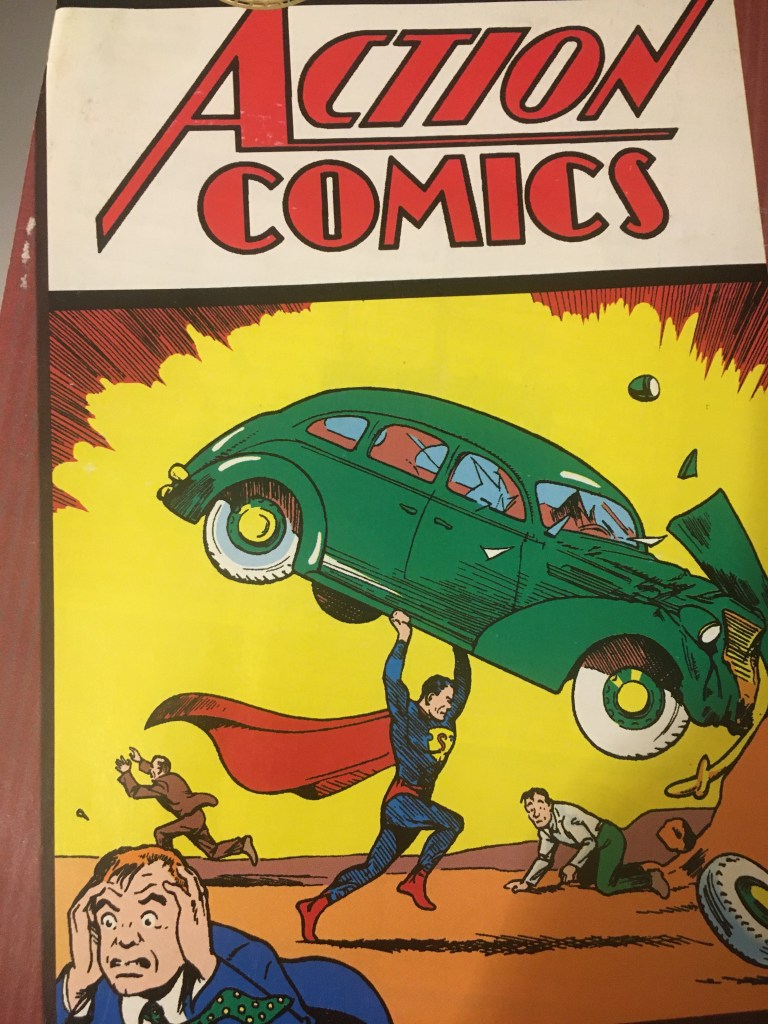
In 1771, George Washington wrote, “I conceive a knowledge of books is the basis upon which other knowledge is to be built.” He was the first of many United States presidents who appreciated books and valued the power of reading.
https://historyfacts.com/famous-figures/article/the-u-s-presidents-favorite-books/
**
HARRY S. TRUMAN AS A GREAT READER

Harry S. Truman was another great reader. Once, when asked by an editor of his memoirs if he liked to read himself to sleep at night, Truman answered, “No, young man, I like to read myself awake.” He was a dedicated student of history, and some of his most-read volumes included Plutarch’s Lives, Julius Caesar’s Commentaries, and Edward Gibbons’ The History of the Decline and Fall of the Roman Empire. The 33rd president also enjoyed the works of Robert Burns, English poet Lord Byron, and William Shakespeare (especially Hamlet, King Lear, and Othello).  "
History Facts website (April 6, 2025)
**

QUEEN ELIZABETH II AND READING

"She'd never taken much interest in reading. She reaed, of course,  as one did, but liking books was something she left to other people It was a hobby and it was in the nature of her job that she didn't have hobbies. Jogging, growing roses, chess or rock climbing, cake decoration, model aeroplanes. No Hobbies involved preferences and preferences had to be avoided . Her job was to take an interest,  not to be interested herself. And besides reading wasn't doing. She was a doer. "

Alan Bennett. The Uncommon Reader (New York: Farrar,n Straus and Giroux, 2007)
**
ABOUT THE COVER TO VIRGINIA WOOLF: A BIOGRAPHY by QUENTIN BELL

"The cover of the Bell biography had a photo of a young Virginia Woolf in half profile, staring off into the distance. She had a low forehead, a remarkably long face, and a prominent chin. She would in no way by contemporsry standards be considered pretty. Yet there was something about her that was truly arresting and intensely sexual."

Lawrence and Nancy Goldstone. Slightly Chipped:Footnotes in Booklore (New York: St. Martin;s Press, 1999)

**

Dear Editors:
   The Guardian writer who called Graham Norton's novels "undemanding" used a term not very useful in discussing literature. No book demands to be read. The term applies to levels of a reader's ability to enter into many worlds of fiction and nonfiction.  Lassie, Come Home might be very "demanding" to an eight year old reader, but far less demanding to a reader of my advanced age. Books of all kinds invite readers in. Sometimes we accept the invitation, sometimes not. No RSVP required.
Sincerely,
Louis Phillips

**
MILLARD FILLMORE AS AN AVID READER

Millard Fillmore was an avid reader who would do nearly anything for a book. On Christmas Eve in 1851, when the Library of Congress caught on fire, Fillmore ran to the scene with a group of Congressmen and “rendered all the service in their power” to stop the fire. Fillmore led the bucket brigade early into Christmas morning.

INTERESTING FACTS website (January 18, 2025)
https://interestingfacts.com/american-president-facts
**

SUBLUNARY

Sublunary,” as I found out, means “relating to the world or life on earth, especially in contrast to the spiritual world.” Created by a team of artists, printers, bookbinders, and calligraphers, these books don’t belong to the real world, at least not in the traditional sense. They can be “lost” or “unfinished,” both of which apply to Sylvia Plath’s Double Exposure (1964/2024?), a semi-autobiographical novel about a wife with an awful husband, the manuscript of which was possibly destroyed by her awful real-life husband, Ted Hughes. The existence of this book here, with its cover of a doubled Plath beneath a serifed title and published by the actual Heinemann company, suggests an alternate and more kind reality in which Plath did not die by suicide, and her manuscript had not vanished.

https://hyperallergic.com/987230/an-exhibition-of-non-existent-books/

**
ON ANTHONY TROLLOPE

" Anthony Troollpe, whose literary output was enormous, became my favorite writer. I have read  almiost all of his forty-seen novels. I have learned so much from him. He understood that even villains have their charming moments. He understood the world of the rich and powerful as well asv thevduc de Saint  Simon did in his diaries of the court of Louis XIV, or Marcel Proust did in his brilliant Remembrance of Things Past."
Dominick Dunne in The Book That Changed My Life, edited by Roxanne J.  Coady & Joy Johannessen (New York:
Gotham Books, 2006)

**

SAM CORBIN'S FAVORITE AUTHORS
"On the other hand, my favorite authors are those who use language sparingly to achieve something profound. Jenny Offill wrote in “The Department of Speculation”: “The invention of the ship is also the invention of the shipwreck.” A short story by Lydia Davis that gets me every time, in just 12 words: “Like a tropical storm, I, too, may one day become ‘better organized.’” It doesn’t take very long to say something that sticks with people for years.
SAM CORBIN. "Game play" in The New York Times (March 12, 2025)
**
JOHN le CARRE' UNDER GREAT PERSONAL STRESS

John le Carré said in an interview with The Guardian on April 13, 2013: "I wrote 'The Spy Who Came in from the Cold' at the age of thirty under intense, unshared, personal stress, and in extreme privacy. As an intelligence officer in the guise of a junior diplomat at the British Embassy in Bonn, I was a secret to my colleagues, and much of the time to myself. I had written a couple of earlier novels, necessarily under a pseudonym, and my employing service had approved them before publication. After lengthy soul-searching, they had also approved 'The Spy Who Came in from the Cold'. To this day, I don't know what I would have done if they hadn't."

iDMb Trivia. The Spy Who Came in From the Cold.
**

THE DANCE OF LANGUAGE

In a good poem,
Every word dances.
Listen up "do-si-do":
This time we are not
Square dancing.

Louis Phillips
CLARA BOW
The It Girl applied her red lipstick in the shape of a heart. Women who imitated this shape were said to be putting a “Clara Bow” on their mouths.
iMDb Trivia
**
Borborygmus
The sound of a stomach rumbling
Everyone has experienced borborygmus. This technical-sounding word is perhaps a more polite description for what you might call “tummy rumbles.” Let’s just hope your next borborygmus doesn’t lead to collywobbles.
WORD SMARTS (April 12, 2025)
**
KANGAROO WORDS
Kangaroo word, n. a word that has a similar word hidden inside it, e.g. BLOssOM. So called for obvious reasons.
**
“The word “jawn” is unlike any other English word. In fact, according to the experts, it’s unlike any other word in any other language. It is an all-purpose noun, a stand-in for inanimate objects, abstract concepts, events, places,individual people, and groups of people. It is a completely acceptable statement in Philadelphia to ask someone to “remember to bring that jawn to the jawn.”
Source: ATLAS OBSCURA website
**
“Kissing the shuttle” is the term for a process by which weavers used their mouths to pull thread through the eye of a shuttle when the pirn was replaced.”
Wikipedia
https://en.wikipedia.org › wiki › Kissing_the_shuttle
**
6 LETTER MAGIC SQUARE
AS S E R T
S EA L E R
S AL I V A
E LI D E D
REV E R E
TRA D E R
from Ripley’s Believe It or Not 7h series (NY: Pocket Books, 1972)
**
RETRONYM
“Snail mail as it has been popularized is an example of a retronym, a word coined to describe something when a new format takes over the former meaning. Before electric guitars became popular, what was earlier simply a guitar had to be called an acoustic guitar. With the popularity of ebooks and audiobooks, now sometimes we have to explicitly specify paper books.”
ANU GARG. Wordsmith (May 6, 2024)
**
COCKSHY
It comes from the verb to shy, meaning to throw. The general term is cockshy, meaning a throw at a thing, originally a cock, for amusement, or the object set up to be thrown at. So, a coconut shy is a cockshy set up with a coconut to be thrown at or as the prize.”
Bruce Newling
**
ONCE IN A BLUE MOON
We all know that this phrase is used to describe events that happen very rarely. But what is a “Blue Moon”? Nowadays, we use the term to refer to the second full moon that we can see within a calendar month. Since moon cycles last about 29.5 days and months last around 30, it is unusual for a month to include two full moons. According to NASA, this phenomenon occurs once every two to three years.
The line was first used metaphorically in 1821, in Pierce Egan’s play called Real Life in London. However, this first use might have been referring to the more literal phenomenon of the moon appearing visibly blue because of atmospheric events, like fires or volcanic emissions.
Dictionary Scoop (January 19, 2026)
]**
THE GISH GALLOP
“This was not a debate. It was Trump using a technique that actually has a formal name, the Gish gallop, although I suspect he comes by it naturally. It’s a rhetorical technique in which someone throws out a fast string of lies, non-sequiturs, and specious arguments, so many that it is impossible to fact-check or rebut them in the amount of time it took to say them. Trying to figure out how to respond makes the opponent look confused, because they don’t know where to start grappling with the flood that has just hit them.”
Heather Cox Richardson -June 28,2024
**
The Black Dahlia murderer mutilated Elizabeth Short before leaving her remains in a Los Angeles park in 1947. The wounds that would come to symbolize the case were two cuts connecting her ears to the corners of her mouth, giving her the appearance of a perpetual grin. Dubbed a Glasgow Smile because of its prevalent use among Scottish gangs in the 1920s and ’30s, this mark has appeared in numerous murder cases since.
from https://www.mentalfloss.com/article/561752/killer-words-every-true-crime-buff-should-know
**
“Some English words are only still in use because of their length — their original usages are long outdated — such as the 28-letter word “antidisestablishmentarianism.” This noun originally meant “opposition to the disestablishment of the Church of England,” but today, it’s almost exclusively used just as an example of one of the longest English words.”
WORD GENIUS SITE (SEPTEMBER 4, 2023)
**
About Holus-Bolus
“Holus-bolus” possibly originated as a pseudo-Latin rhyme based on the phrase “whole bolus” (“all at once”), but might also come from the Greek phrase “hólos bôlos” (“clump of earth”).
WORD GENIUS (MARCH 15, 2022)
**
RHYMED ENDS
Bouts-rimés (“rhymed ends” in French) is a poetic exercise where one picks rhyming words in a given order, and someone else composes poetry with the selected words at the end of each line.
The idea is to pick some unlikely rhymes to make it challenging for the poet. But this seems to relate a book of rhymes, which songwriters and especially rappers use to make composition easier, not harder. I might revisit this topic in the not-too-distant future.

A caconym is an unattractive name, whether a rude nickname like calling a cat a “mousefarter” or just a primary name, as in the best sentence C.S. Lewis ever wrote:
There was a boy named Eustace Clarence Scrubb, and he almost deserved it.

T.Campbell. August 28, 2025
*

CRAZY EIGHTS BY LOUIS PHILLIPS

               P

          TRAM  OLINE
**

INV  SBLE
**
EQ  UAL = Separate but equal
**
SEPE              RATE

**
caMel                               giraffes

HOLE                                   ZER0


       this e.g. - crazy eights

CELEBRATING THE PUBLICATION OF A NOVEL
WRITTEN BY AN AMERICAN AUTHOR
"The first novel by a writer born in America was The Life of Harriet Stuart by Charlotte Ramsey Lennox, published in two volumes in London 1751....This novel, her first, was a semiautobiographical romance. Samuel Johnson, an eminent English writer, was a personal friend of hers and celebrated the book publication by throwing an all night party."
FAMOUS FIRST FACTS, 5th edition, edited by Joseph Kane, Steve Anzovin,nand Janet Podell (New York: H.W. Wilson Company, 1998)
**
SOMETIMES A WRITER DOES NOT ALWAYS
ACHIEVE SUCCESS
When the young Robert Risken was employed as
an office boy in Joe Golden's textile company:
"Realizing that Risken wrote poetry at lunchtime, Golden offered him a promotion if he would write a lertter cum marriage proposal to Trixie Friganza, a girl in the office whom Golden was too shy to approach himself. Riskin's letter failed to grab the necessary attention and light a fire under the relationship between his boss and Trixie, and he was duly fired."
Ian Scott. Robert Riskin: The Life and Times of a Hollywood Screenwriter (Lexington, Kentucky: The University Press of Kentucky, 2021)
**
HOW TO GET UNSTUCK WHEN WRITING
"When I am stuck on something I'm trying to write and have exhausted all the other options --ignoring the problem, staring blankly at the problem, moving the problem around to see it's less annoying in some other location, eating all the chocolate in the house -- I eventually do what I should have done in the first place and go read some writer who is much better than I am.
"The candidates are legion."
Kathryn Schulz. "Casting a Line: the hard-bitten genius of Norman Maclean" in The New Yorker (July8 & 15, 2024)
**
REPEATING A VERB THREE TIMES
As Galway Kinnell writes, in perhaps the only sentence in English where the same verb repeats three times in a row and still makes sublime sense: "Whatever what is is is what I want."
Mark Doty. The Art of Description (Minneapolis: Graywolf Press, 2010)
**
"If you take hyphens seriously you will surely go mad."
John Benbow
**
A guy comes home from college to find his mother sleeping with his uncle, and there’s a ghost running around. Write it good, it’s Hamlet; write it bad, it’s Gilligan’s Island.”
Lorne Michaels
quoted by David Mamet in Bambi vs. Godzilla
(New York: Pantheon Books, 2007)
**
SCIENCE FICTION AS METAPHOR
I don’t agree with those people who think of science fiction as some kind of prediction of the future. I think it’s a metaphor for the human condition.
Brian Aldiss
**
CONVERSING WITH HENRY JAMES
He talked as if every sentence had been carefully rehearsed; every semicolon, every comma , was in exactly the right place, and his rounded periods dropped to the floor and bounced about like tiny rubber balls.
Gertrude Atherton, on Henry James, in The Adventures of a Novelist (1932)
Quoted by Dr.Mardy Grothe in his collection of quotations about sentences --
A BOOK DEDICATION
To my wife
Signe Toksig
whose lack of interest
In the book has been
my constant desperation,
The dedication in Francis Hackett's THE INVISIBLE CENSOR
**
"The adjective is the banana peel of the English Language."
Clifford Fadiman
***
"What is a question mark but what's needed to complete this thought?"
Karen Elizabeth Gordon, in The Well-Tempered Sentence
**
ON INVENTING THE COMMA
"We don't really know who invented the comma, but a typical Roman sentence couldn't make it with fewer than
ten of these metrical incursions..."
Karen Elizabeth Gordon, in The Well-Tempered Sentence
**
J.D. SALINGER
He seemed to regard his literary success as a moral stain, It would be hard to think of a contemporary American writer whose personal life was more true to the ethos of his fiction.
Michael Greenberg. The New York Review of Books (March 15, 2010)
ON TEACHING WRITING
“Donald Bartheme once said to me,” The trouble with teaching is you spend all your time working on someone else’s rotten manuscript when you should be working on
Your own rotten manuscript.”
Padgett Powell. “Donald Barthelme” in Indigo (New York: Catapult, 2021)
**
DO NOT ATTACH A CHRONOMETER TO YOUR
TYPEWRITER OR COMPUTER
“Someone once told me a story about a man who was an editor for Playboy. He got some sort of chronometer that he attached to his typewriter. He used to write all day long, and he called a person I know and said he had been clocking himself and he was spending forty-three minutes a day at his typewriter and that’s why he put this thing on it. So he would really sit there and force himself to work. And a week later he shot himself. Of course, this is not to say that this is why he killed himself. Still, it’s something to think about.”
Nora Ephron. “Nice to See Nora Ephron Happy in New York,” in an interview by Michael S. Lasky. Writer’s Digest (April 1974
"A bad review is even less important than whether it is raining in Patagonia."
Iris Murdoch
**
THE DEDICATION OF FRANK SCULLY’S NON-FICTION BOOK – ROGUE’S PROFILE OF MY EMINENT CONTEMPORARIES (1943)
Dedicated to
my wife, poor wretch,
and about time
**
OBSOLETE POEM #5432
All right, like the word vouchsafe,
I am obsolete.
Put me out to pasture
With other woolly mammals,
My head a neon jukebox
Of songs no longer worth remembering.
Just read a death notice
For my first wife.
All those memories down the drain,
Like the old chemistry professor
Wanting to see our marriage license
Before he and his wife made our bed
In the guest room.
Simple acts of kindness
Dissolving into air,
into thin air, as if they never happened.
The professor and his wife
Came to New York, &
Treated me to supper
At a Japanese restaurant
Where the meal was cooked
Right at our table. I remember the dsy
He took me for a ride in the Cadillac
He had just bought. He was so proud
That he could afford
On his Assistant Professor's salary,
A pink Cadillac.
Memory is such a deep pool.
How easy it is to drown in it.
Louis Phillips

"A movie imprisons your eyes. It acts on you , and you on it. Hence, you don't 'see' or 'look at' a movie.
You watch it the way a cat watches a bird until the cat strikes, kills, eats."
             Leonard Michaels
quoted in Lifelines: A Commonplace Book by Charles Cherry
**
THE MINIDRESS SHOWN IN FORBIDDEN PLANET

The minidress worn by Anne Francis was seen to be the first worn in a Hollywood movie, and resulted in the film being banned in Spain (it was not shown there until 1967), due to General Franco's dictatorship that considered it dirty and obscene that a woman wore a minidress to show off legs.
idmB trivia
**
ON JEWISH FILMS FROM HOLLYWOOD

While Ben Hecht wrote the original “Scarface,” an Italian gangster flick for Yiddish theater veteran Paul Muni (né Frederich Meshilem Meier Weisenfreund), Yiddish film thrived in Europe and the U.S. With the rise of the Third Reich, Hollywood welcomed a crop of European Jewish talent (directors like Billy Wilder, Otto Preminger and Fritz Lang) whose work would enrich the landscape of American film. But their films weren’t necessarily Jewish – at least not yet.
By the 1960s, studios, once reticent to touch on Jewish topics – out of disinterest, fear of an alienated audience or the threat of German boycott throughout the 1930s  – were happy to roll the dice on actors named Dustin Hoffman and Barbra Streisand. Filmmakers like Mel Brooks, Mike Nichols, Elaine May and Woody Allen would kick off a renaissance of Jewish humor in the movies, fully committing to what their predecessors only hinted at. Paul Mazursky and Sidney Lumet would capture the counterculture and document the life of survivors. Otto Preminger would make “Exodus” with Paul Newman. Hollywood was Jewish and so, in many instances, was the film scene in Europe, South America and a new state in the Levant called Israel. Hearing the words “mazel tov” or “schlep” or seeing a bride and groom lifted aloft on chairs as “Hava Nagila” plays was no longer uncommon at the cinema. '

By PJ Grisar in THE FORWARD (July 1, 2022)
https://forward.com/culture/film-tv/502654/125-greatest-jewish-movie-scenes-annie-hall-big-lebowski-blazing-saddles/
**
HOLLYWOOD FROGS

There are more than 6,000 species of frogs. Only one species, the Pacific chorus frog, is known to make a “ribbit” sound. Its prevalence on the West Coast of the U.S. led to its inclusion in many films, which led to the sound’s association with frogs in general.

ONE GOOD FACT (March 16th, 2025)
**
PAULINE KAEL ON MOVIES OF THE 1960's

"To the children of “Blow-Up,” movies that are literary in the worst way—movies that superficially resemble head books and art films—can seem profound and suggestive. Every few months, there is a new spate of secondhand lyrical tricks. Robert Redford is impaled, like a poor butterfly, in frozen frames at the end of picture after picture. Directors have become so fond of telescopic lenses that any actor crossing a street in a movie may linger in transit for a hazy eternity—the movie equivalent of a series of dots.
Pauline Kael, "Notes on Hearts and Mind" in The New Yorker (January 15, 1971)
**

ERROL FLYNN IN THE ADVENTURES OF ROBIN HOOD (1938)

During one fight sequence, Errol Flynn was jabbed by an actor who was using an unprotected sword--he asked him why he didn't have a guard on the point. The other player apologized and explained that director Michael Curtiz had instructed him to remove the safety feature in order to make the action "more exciting". Flynn reportedly climbed up a gantry where Curtiz was standing next to the camera, took him by the throat and asked him if he found that "exciting enough
**

ALFRED HITCHCOCK CHANGED HOW MOVIES WERE SCREENED IN THEATERS

Before 1960 most movie theaters did not have set times when screenings began—movies were constantly looping. Patrons would walk into the theater in the middle of a film, watch to the end, and wait for the movie to begin again to see what they missed. Alfred Hitchcock is credited with disrupting this practice. He insisted that no one be allowed in after the start of a Psycho screening to prevent spoiling its ending.

ONE GOOD FACT website for January 5th, 2025
**
SMALL TIME CROOKS & SHERLOCK HOLMES

"The film contains several references to Sir Arthur Conan Doyle's short story 'The Red-Headed League,' including the plot to break into a bank through the basement of an adjacent storefront and Frenchy's attempt memorize the contents of the dictionary."
iMDb Trivia
**
SILVER STREAK & NORTH BY NORTHWEST

When meeting Gene Wilder after having seen Silver Streak (1976), Cary Grant asked him if the script had been in any way inspired by North by Northwest (1959). As Wilder admitted it was correct, Grant then added, "I knew it! Have you noticed that each time you take ordinary people, say, like you and me, then take them in a situation way above their heads, it makes a great thriller?"
iMDb Trivia
**
Lucille Ball Auditioned for the Role of Scarlett O’Hara in “Gone With the Wind”

In 1939, Ball — along with 1,400 other hopefuls — auditioned for one of the most celebrated roles in Hollywood history. Her audition proved to be disastrous, however, as she showed up soaking wet and tipsy, the result of running through a rainstorm after having one too many drinks to ease her nerves. But that isn’t Ball’s only Gone With the Wind connection. In an ironic twist, she would go on to own many of the movie’s sets. In 1957, her production studio, Desilu Productions, purchased 33 soundstages (among other things) from RKO Pictures, including the exterior of the Tara plantation.

Interesting Facts website (December 10, 2025)
https://interestingfacts.com/lucille-ball-facts/

**

Today's selection--from The Hollywood Brand by Peter Catapano.

The MoMA  and Iris Barry redefine traditional museum art.
“In November 1935, five years after its founding, the Museum of Modern Art in New York announced the opening of its Film Library ‘to render possible for the first time a considered study of the film as art.’ This announcement by Iris Barry, the curator of the Film Library, overstated the case in suggesting that MoMA was the first establishment to provide institutional support for the study of ‘film as art,’ & we saw in Chapter 4, the University of Southern California, with the help of the Academy of Motion Picture Arts and Sciences, had begun offering classes in both production and criticism/history prior to the creation of its Cinema Department in 1932. Other universities and museums had also begun including the motion picture in their programs more than a decade before MoMA. Stanley Kauffinan cited a course taught by Victor O. Freeburg at Columbia University's School of Journalism that used Vachel Lindsay's The Art of the Moving Picture as one of the first college film classes."

              DelanceyPlace.com via gmail.mcsv.net (January 17, 2025)
https://mail.google.com/mail/u/0/#inbox/FMfcgzQZSjfQNMMpMNdvVlPVFjKJRhhVcompose=GTvVlcSPFrGpssPlsVpLjkXHKbjBCKtTwLzPlbdpPkWMKpFPLhMtMTDPVzLmVgfXQCVmRSrnGmhpr

**
On August 10, 1984, Red Dawn became the first movie to be released with a PG-13 rating.

Mental Floss Magazine
**
Films for persons over 75:

 THREE MUSKETEERS. Instead of sword fights,
duels are settled on shuffleboard courts.

THE GRADUATE:  "I have a word for you."
                               "Plastics?"
                               "No. Fiber."
Remake of Niagra :  Viagra
**

WHEN A DOG RECEIVED AN ACADEMY AWARD NOMINATION FOR WRITING THE BEST ADAPTATION SCREENPLAY

" Unhappy with the wholesale changes to his story, (Robert)Towne took a page from the disgruntled directors who disown their films under the pseudonym of Alan Smithee and insisted on being credited as "P.H. Vazak" — the name of his Hungarian sheepdog — for his contributions to the script. Lo and behold, the completed Greystoke: The Legend of Tarzan, Lord of the Apes garnered a Best Adapted Screenplay Oscar nomination in 1985 for the duo of Michael Austin and P.H. Vazak. The awards ceremony seemed ripe for comedy, but ultimately human Peter Shaffer received the trophy for Amadeus."

INTERESTING FACTS WEBSITE (JANUARY 17, 2025)
**

JACK LEMMON TELLS PLAYBOY WHAT IT FEELS LIKE TO BE A YOUNG ACTOR STARTING OUT IN A VERY DIFFICULT CAREER

Playboy: Did it ever occur to you to quit?

LEMMON: No, it didn't, but there was an awful lot of fear and insecurity the first few years. Still, I would not have quit. The terrible thing is that it isn't a matter of just getting a little job now and then or a small part. An actor really can't begin to know how good he might or might not be until he gets a couple of good parts with a good cast, in a good piece, with a good director. The rest of the time, you don't really know. And it may be ten years and you're going to have to look in the mirror, finally, after all of that time, and say, 'I'm a journeyman,' or 'I can't cut it."
"20 Questions: Jack Lemmon " in Playboy (June 1981)
**
TROUBLE IN PARADISE

The scenes in which Herbert Marshall is running up and down the stairs at Madame Colet's were done with a double who is only seen from the rear. Mr. Marshall lost a leg in WWI and although it was almost impossible to notice that he used a prosthesis, he could not perform any action that called for physical agility.
**

iMDb Trivia for TROUBLE IN PARADISE
**
HOW DO THE MOVIES DO IT?

7:43 A.M.
I do not wish to be entertained,
By lovers unknotting
Picture-perfect bodies
Under blue gels.
Nobody, not even my doctor
Wants to see me naked.

How do the movies do it?
With music over
& under all, violins, harps,
Pianos & kazoos,
Men, women, & others
Backlit & keylit,
In frame after frame,

Tumble over each other,
Yet there is
No more love in the world
Than there was before.
When properly lit,
How seductive is
The three-walled room

With the bed unmade.
Time to go to work.
How about some lipstick
On my cheek or collar?
Have I learned nothing
From silver-screen romance
Except that there is
More of it than I shall ever need.


Louis Phillips.

cold turkey
"without preparation," 1910; narrower sense of "withdrawal from an addictive substance" (originally heroin) first recorded 1921. Cold turkey is a food that requires little preparation, so "to quit like cold turkey" is to do so suddenly and without preparation.
Online Etymological Dictionary
**
Hanukkah Means “Dedication”
The word “Hanukkah” is a transliteration of the Hebrew word for “dedication.” This is a reference to the historical moment at the heart of the holiday, the rededication of the Second Temple of Jerusalem during the Maccabean Revolt of the second century BCE. At the time, the Hellenistic Seleucid Empire was forcibly oppressing the Jewish population by trying to eradicate their religious practices; as part of this effort, they defiled the temple and placed an idol on its altar. In 164 BCE, the Maccabees (a group of Jewish warriors) recaptured Jerusalem, cleansed the temple, and rededicated it on the 25th day of Kislev, a month in the Hebrew calendar (and the date used today to mark the beginning of Hanukkah). The eight candles on a hanukkiyah commemorate the moment when Jews relit the temple’s ner tamid (Hebrew for “eternal light”), a lamp meant to burn perpetually in a synagogue. Although they had only one day’s worth of oil, the flame miraculously burned for eight days — enough time to get more purified oil to feed the flame."

INTERESTING FACTS website (December 28, 2024)
https://mail.google.com/mail/u/0/#inbox/FMfcgzQXKqrVfwjzJwxBJPmLzQnBKTld
**

WEIRD WORDS DICTIONARY

acadamic-- a college course involving the study of the Grand Coolie Dam
babblegum-- a candy that causes you to become garralous
chumdrum -- Experiencing a humdrum time with a pal
dabblecross-- swiftly changing from one hobby or from quickly perusing  numerous academic  subjects
GALAxy--  Elaborate party thrown in a corner of our Milk Way
imomiseration--The act of making your mother miserable
majamas-- sleep wear for women
Messimess -- cleaning up a stadium after a soccer game
psittacinema -- any movie that imitates a previous film

robbernecking -- Looking around to see what things
                                are worth stealing

slaverfest -- making peanut butter sandwiches for a large group of children


spurrealism--- a dada cowboy movie where Roy Rogers lassos a burning
                            giraffe

tennisebrous-- Playing tennis in semi-darkness or dark
                              shadows


 MAKING A BEE LINE
In June 1828, the American Quarterly Review published an article that contained an early use of the term “bee-line,” referring to how a bee released from captivity appeared to set a direct course to return to its hive. This was true even if the bee appeared to move in a crooked pattern rather than a straight line, as it was still heading quickly back to its hive. Further scientific studies of the insects showed that bees also followed direct patterns in other situations, such as when they left and returned to the hive as part of their daily quest to harvest nectar.
Almost overnight, people began to use “bee-line” in an idiomatic sense. The term appeared in an October 1829 edition of the New-York Spectator: “I drew a bee line to the next tavern.” The exact phrase “make a bee-line” appeared in print by 1835, as seen in an example in a book called Clinton Bradshaw: “Now there’s the door — make a bee-line out, if you please, gentlemen.” These examples show a rapid shift from “beeline” as a scientific descriptor to the idiomatic usage.
https://wordsmarts.com/beeline/?lctg=836f5d3d-5790-467f-9432-066ef87ba5ce
**
**

ON GOOGLING -- HAVE YOU GOOGLED YOURSELF?
What is the greatest legacy of Buffy the Vampire Slayer? Buffy fans might have a lot of answers for you, but the widespread answer is popularizing the use of “google” as a verb. In the 2002 episode “Selfless,” computer geek and sidekick Willow asks Buffy, “Have you googled her yet?” — referring to the idea of using the internet to search for data about someone else. At the time, Google was still relatively new, and it wasn’t yet the de facto search engine for everyone. Founder Larry Page had used “google” as an intransitive verb as early as 1998, but Buffy ushered in a new transitive use about googling something specific, compared to how Page used googling as a general concept.
This brief line in an episode of Buffy contributed to “google” moving from company name to general term. The verb “google” was named the most useful word of 2002 by the American Dialect Society, and it entered the Oxford English Dictionary in 2006.
https://wordsmarts.com/beeline/?lctg=836f5d3d-5790-467f-9432-066ef87ba5ce
WORD SMARTS (February 7, 2025)
**

Ballyhack
MEANING:
noun: Hell.
ETYMOLOGY:
Of uncertain origin. Perhaps after the Irish village Ballyhack, where a castle was the holding place for confederates caught in a rebellion before they were expelled. Earliest documented use: 1843.
Wordsmith
**
WORDSMITH -- Anu Garg

"It's tempting to tell such people to get a life, and it's hard to believe a guy can get e-mail like this for basically learning English. But India-born Garg, 35, who now lives near Seattle, has done a lot more. For the past nine years, while trying to improve his own command of the language, Garg has e-mailed a word a day (wordsmith.org/awad), plus its definition, pronunciation and roots, to an increasingly large group of recipients. His free e-mail list, which started with about 200 subscribers, has ballooned to more than 500,000."

USA TODAY (January2, 2003
**

Anu Garg, the wonderful Wordsmith man, quoted
the following in his website for August 12, 2024:

The poet Samuel Butler (1612-1680) once wrote:

For he cou’d coin, and counterfeit
New words, with little or no wit;
Words so debas’d and hard, no stone
Was hard enough to touch them on;*
And when with hasty noise he spoke ‘em,
The ignorant for current took ‘em.

**
THE DANCE OF LANGUAGE

In a good poem,
Every word dances.
Listen up "do-si-do":
We are not doing
A square dance at this time...

Louis Phillips

SHAKESPEARE AND WILD GEESE

"I, also, want to use one of the Fool's lines as a title for something -- 'Winter's not gone yet, if the wild geese fly that way.' Can't think how to shorten it.
   "Is there any connection between wild geese and Lady Wildgoose? Lady W and her sister Lady Sandy tried, in 1603, to get their old father Brian Annesley registered as insane. They were frustrated by their cordell. Shakespeare must have heard gossip about it."

   Alec Guinness. My Name Escapes Me

**

MARLON BRANDO AS MARK ANTHONY

"Although he was an avid reader and memorizer of Shakespeare, his performing experience had been confined to an acting-school production of “Twelfth Night” and, more recently, to taunting Vivien Leigh—then Mrs. Laurence Olivier—with a nastily precise imitation of Olivier’s Agincourt speech from “Henry V.” The director of “Julius Caesar,” Joseph Mankiewicz, came upon his star studying tapes of speeches by Olivier, John Barrymore, and Maurice Evans, and complained that the genteel result made him sound more like June Allyson. Brando later explained that the most daunting aspect of playing Shakespeare was relying on the written text, since he had learned to search around and under words—in pauses, in gestures, in grunts and mumbles, even in silence—for a sense of truth."


 Claudia Roth Pierpont. " Method Man:the greatest American actor lost his way" in THE NEW YORKER (October 20, 2008)

**
SHAKESPEARE'S HEROES & JACK NICHOLSON

"(JEREMY) Larner was angry that the heroes of Drive were not true heroes but in the mock-heroic vein. He cited an example from Shakespeare. Nicholoson
batted it away. 'Hey, Jer,' Jack sneered. 'Shakespeare, what Shakespeare? 'We're reaching  more people than Shakespeare ever dreamed of.'"

**

From light-verse writer BRUCE NEWLING


"Because I was so young when my father died, I have only fragmentary memories of him; and almost all I know of him was derived from accounts provided primarily by my mother but also by a few family members.  Michael Kirke, a first cousin fully a generation older than 1, for example, told me that my father had a fine singing voice and therefore he was often cast as the clown in such Shakespeare plays as "Twelfth Night," singing, as called for, during the course of the play.  My niece Sian (Welsh for Jane) has a framed photograph of my father dressed as the clown or fool in cap and bells, sitting cross-legged and holding a lyre.

Coincidentally, in 1947, as part of the quatercentenary celebrations of the founding of the school I attended, Queen Elizabeth's School in Crediton, Devon, a non-speaking part was created for me in a production of "Twelfth Night." I was cast as the page to Malvolio, the steward to Olivia.  My costume in black was the same as that worn by Malvolio, and we each wore a ruff; I carried a staff, as he did; and my role required that I mimic every gesture of Malvolio, as if I were a living shadow of him, you might say.  I had to strictly confine my attention to Malvolio—no side glances at the audience—and the whole effect was to point up the vanity and insecurity of my master, complementing the cruel practical jokes played on him by Sir Toby Belch and Sir Andrew Aguecheek.

The play was performed on an openair stage backed with a tall yew hedge on the grounds of the girls' school next to mine.  Malvolio was played by the town physician, Dr. Jackson, and it was he who proposed that Malvolio should have a page, having seen a London production of the play many years before in which Malvolio had not one page but six.  Sir Toby Belch was played by the physics master Gordon Vasey, who produced all the school plays while I was there; and there might have been one teacher from the girls' high school in the cast. Otherwise, the roles were played by boys and girls from the two schools.

I have a photograph of the entire cast, 32 in number, standing side by side in a line across the entire width of the stage.  I pose kneeling on one knee, with Malvolio standing behind me.

Orsino, duke of Illyria, was played by a senior boy named Peter Bagi, and his delivery of the lines with which the play opens remains with me still.  "If music be the food of love, play on.  Give me excess of it, that, surfeiting, the appetite may sicken, and so die."   And very soon thereafter: "Enough, no more.  'Tis not so sweet now as it was before."  Oh, my.
**

MASTER OF THE REVELS

"An officer first appointed in 1494 to serve under the
Lord Chamberlain , and supervise Court entertainment.
   "The office became extinct in 1734 with the 'Licensing Act,' at which time the Lord Chamberlain's took over Responsibility for the Supervision and 'Censorshiorship of
Plays."

E.K. Chambers. The Elizabethan Stage. Volume 1 (Oxford
University Press, 192
**
THOSE THAT PLAY THE CLOWNS

"'Those That Play the Clowns'must pay the piper, and so, after four performances, at the ANTA , the poor players involved, among them Alfred Drake and Joan Greenwood, went to rest. The show had to do with what might have happened to the group of strolling players in Denmark lured by Hamlet to do their bit in his tragedy. It was written by Michael Stewart, and his dialogue was remote from the Globe."

John McCarter. "Theater" in The New Yorker (December 3, 1966)
**

"BEESEECH YOU,SIR, BE MERRY"

At the 9th hour
Reckoning from sunrise,
Our lives speak:
Hold now, Fellow. Much,
In spite of dying,
To be merry about.
None too subtle
When out shoots the verve
Of heaven shine.
Light. More light!
Blazed by sun,
The fluted world writhes,
Blisters with flesh,
With mercy.
Gradual lusters
Of heartfelt longings.
I beseech you, Sir,
Bury the dead. Turn
To the loom of the living
Where even wormwood laughs.

Louis Phillips
FROM ICELAND
“…hakari , which is shark meat allegedly buried in the sand, and then preserved by fishermen who urinate on it as they go by every day for a few months, until it is truly inedible to everyone but Icelanders.”
Jane Smiley. “Alone in Iceland” in BETTER THAN FICTION 2: True Adventures from 30 great fiction writers, edited by Don Georgia (London: Lonely Planet Publications, 2015)
GEE, LET’S BUTTER UP SOMEWHAT
“To butter someone up is to beguile them, or to lavish them with praise to get what you want. The idiom evolved from the very literal buttering that takes place as part of the Hindu tradition of throwing balls of clarified butter (called ghee) at the statues of deities. In exchange for the offering, it was thought that buttered-up gods would reward the faithful with a good harvest. ”
Interesting Facts website Sept. 9,2023
**
STARCHY VEGETABLES AS WEAPONS OF WAR
| Starchy vegetables aren’t usually top of mind when thinking of weapons of war, but potatoes played a vital role in a World War II battle — and not by feeding soldiers. Everyone’s favorite tuber took a break from being boiled, mashed, and stuck in a stew on April 5, 1943, when the crew of the USS O’Bannon was alarmed to see a Japanese submarine approaching. According to U.S. Navy Commander Donald J. MacDonald — who wrote that, prior to the incident, “the sea was calm; there was no moon; the night was very dark; the sky was overcast and there were intermittent squalls” — the vessel was first spotted at a distance of 7,000 yards traveling at a speed of 10 or 11 knots. |
| After initially engaging with depth charges and 20 mm guns, the O’Bannon was eventually close enough to its target for sailors to begin throwing objects at it — including, for lack of a better option, potatoes recovered from their deck lockers. One version of the story suggests the Japanese soldiers on the deck of the submarine, believing the spuds were actually hand grenades, panicked by throwing them both overboard and back at their attackers. Their efforts were for naught: The submarine sank and the Americans were victorious. Because the potatoes used were from Maine, the Maine Potato Growers Association presented the O’Bannon with a plaque “for their ingenuity in using our now proud potato” to sink an enemy vessel. The plaque remained on the ship until it was decommissioned in 1970. |
| INTERESTING FACTS (June 4, 2025) |
THE ARNOLD PALMER
According to Arnold Palmer’s own website, the legendary golfer was thirsty one hot day in the 1960s when he ordered a mixture of lemonade and iced tea. A woman sitting nearby overheard the order and asked the server for “that Arnold Palmer drink.” Ever since then, iced tea and lemonade have been known as an Arnold Palmer….”
**
DIET IN ANCIENT ROME
“Cereal grains, particularly wheat and oatmeal, were part of almost every meal in ancient Rome. These grains were typically used to make bread, biscuits, or porridge, and were eaten by the common folk, the upper crust, and soldiers in the Roman army. Roman porridge recipes survive to this day, including one in Cato the Elder’s De Agri Cultura, a treatise on agriculture written around 160 BCE, which happens to be the oldest remaining complete work of prose in Latin. The simple recipe, which isn’t dissimilar to modern counterparts, suggests soaking wheat in boiling water before adding milk to create a thick gruel — a staple dish that anyone in Rome could have prepared.”
HISTORY FACTS WEBSITE –July 10, 2024
**
Andrew Jackson & THE 1,400 POUND CHEESE
In 1835, Jackson received a present at the White House: a 1,400 pound wheel of cheese. It sat around idle for two years until Jackson, sick of the cheese, invited 10,000 visitors into the White House to get rid of it. As one resident recalled: “The air was redolent with cheese, the carpet was slippery with cheese, and nothing else was talked about at Washington that day.” Another called the event, “an evil-smelling horror.”
INTERESTING FACTS WEBSITE (January 18, 2025)
OF GREAT DETECTIVES AND TRIPE SAUSAGE
“Why we read is an interesting subject. I read Georges Simenon’s books to find out what kind meal Detective Jules Maigret is going to enjoy next. Please Maigret I say to myself, you have not eaten a tripe sausage – isn’t it time?”
Deborah Levy in “By the Book:” (The New York Times Book Review, December 15, 2019).
**
| BAILEY’S IRISH CREAM The “Baileys” of Baileys Irish Cream does not refer to any real person or family. It was chosen in 1973 by two advertising consultants inspired by the name of a bistro near their office. ONE GOOD FACT website February 18th, 2025 In the early 1900s, researchers discovered that pine trees near black currant plantings often became sick with a type of fungus known as white pine blister rust. The disease causes lesions on branches and trunks; as the blisters spread, the tree begins to die, and its evergreen needles turn a rusty hue. In an effort to protect the white pine logging industry — one of the most valuable in the nation at the time, and worth up to $1 billion — Congress banned black currants in 1911, going so far as to destroy currant farms with herbicides. Five decades later, botanists lobbied in favor of a return to currant farming, arguing that newly developed bushes were disease-resistant and posed little risk when planted away from pine trees. But despite federal approval for growing the currants in 1966, many states upheld their bans. Connecticut’s 1929 law fined anyone in possession of currant plants up to $25 until 1988, and New York — the top currant producer of old — held out until 2003. Today, black currants are making a slow comeback, with berry farmers in New York, Minnesota, Connecticut, and elsewhere hoping these fast-growing vines will be restored to their former glory.”: INTERESTING FACTS WEBSITE (July 17, 2024) https://mail.google.com/mail/u/0/#inbox/FMfcgzQVxbqKgstJwbhQJnJwlfLGQMpl |
**WEIGHT WATCHING?
Why am I overweight?
Because of the stress
Of spreading myself too thin,
Louis Phillips

NEW YORK CITY (Circa 1000 B.C.E.)

"Some of the first humans to New York City arrive in canoes in 1000 B.C.E. , paddling across the wide river from another island (and the region that is now Brooklyn), through thick reeds to 'Mamhatta' or 'hilly island,' and its vedant forests of oaks, and trees, spruces, cedars, and pines, with tangles of blackberry, raspberry, and strawberries growing at their trunks. The local Native Americans, the Lenape, hunt deer, bear, mink, turkeys."

Prudence Pfeiffer. The Slip: The New York City Street that Changed American Art Forever (New York: Harper,2023)
**
ENTERTAINMENT IN NYC IN 1809

"Already, the city was the nation's foremost destination for refinement and for spectacle, from the newly expanded Park Theater, whose domed interior was touted as resembling 'the Temple of Jupiter at Athens,' to the Corlear's Hook Circus, where 'the Royal Tiger Nero' could be seen in contest with a 'large Wild Bull, and immediately after, a large Wild Bear.'

 Elizabeth L. Bradley. knickerbocker: The Myth Behind New York
(New Jersey: Rutgers University, 2009)
**
A BRIEF STROLL THROUGH GREENWICH VILLAGE

https://www.facebook.com/watch/?v=4252536131643038
**

THE BIG APPLE

" The phrase doesn’t seem to have been intended as a nickname, however — especially since the name in question wasn’t capitalized.
In fact, it was actually a horse-racing column published by the New York Morning Telegraph that popularized the term. “The dream of every lad that ever threw a leg over a thoroughbred and the goal of all horsemen. There's only one Big Apple. That's New York,” racing journalist John J. Fitz Gerald wrote in a 1924 column eventually called “Around the Big Apple.” However, Fitz Gerald apparently first heard the term from two Black stable hands in New Orleans. As etymologist Michael Quinion explains, “the Big Apple was the New York racetracks … the goal of every aspiring jockey and trainer .. for those New Orleans stable hands the New York racing scene was a supreme opportunity, like an attractive big red apple.”
    The expression was later popularized by jazz musicians in the 1920s and 1930s, then picked up in the 1970s by president of the New York Convention and Visitors Bureau Charles Gillett, who began a tourism campaign around the slogan that was designed to counter New York’s rising crime rates and bad reputation, among other issues.

INTERESTING FACTS website
**
The Bowery film (1933)

Directed by Raoul Walsh (who also directed High Sierra and White Heat) and released in 1933, The Bowery is an energetic, twisting, improbable, and wonderfully entertaining view of New York’s most notorious avenue during one of the city’s most exciting decades: the late years of the 19th century. The cast includes Wallace Beery, a saloon owner named Chuck Connors, and his rival Steve Brodie starring George Raft. In 1933, the same year that King Kong was released, Fay Wray plays Lucy Calhoun who, like Stephen Crane’s Maggie, is desperate and adrift in the city. Other characters have outrageous names like Slick, Lumpy Hogan, Googy, and a young Jackie Cooper playing a street punk named Swipes McGurk. "

https://www.mrstephenwolf.com/twenty-great-downtown-movies
**
GRAND CENTRAL DEPOT

Cornelius Vanderbilt began the construction of Grand Central Depot in 1869 on 42nd Street at Fourth Avenue as the terminal for his Central, Hudson, Harlem and New Haven commuter rail lines, because city regulations required that trains be pulled by horse below 42nd Street.[6] The Depot, which opened in 1871, was replaced by Grand Central Terminal in 1913.

Wikipedia. 42nd Street
**
GEORGE WILLIAM SWIFT TROW, Jr. & NEW YORK CITY

George William Swift Trow, Jr.,’s family called him Swift. The name fit his quickness of wit and spirit, and his grace. His friends, of whom I was one, called him George, pronounced in a descending tone as if in reference to his firmly grounded authority on subjects important to the rest of us, or not. The Trows had been in New York City for generations. When I came from Ohio, in 1974, I knew nothing about the city and had no connection to it except as a destination for ambition. In the nineteenth century, an ancestor of George’s had published what was known as “Trow’s Guide,” an early directory of the city’s residents and their addresses. Another ancestor had been on the Hudson River, in 1804, when Alexander Hamilton was being rowed back to Manhattan after his duel with Aaron Burr. George’s ancestor looked at the boat through a telescope and said, “My God, they’ve shot Alex Hamilton!” It’s not an exaggeration to say that all my visceral knowledge of old New York derives from that sentence, and from the way George said it (spoken, it doesn’t have a comma), and from other things George told me. I wasn’t a New Yorker, and George made me one."

Ian Frazier. On George W. S. Trow’s “Eclectic, Reminiscent, Amused, Fickle, Perverse” New Yorker Classics. March 2, 2025

**

MY WIFE STANDS AT OUR BEDROOM WINDOW

My wife stands at our bedroom window.
Where is the moon,
What have we done with it?
It was here yesterday. Where did it go?
When you are married
For as many years as we have been
So many persons, objects,
Astronomical events become neglected.
Perhaps she is counting red taillights
Of an endless line of cars
Crawling like snail to New Jersey.
Never has the George Washington Bridge,
Next to Venus, been so far away.
Or is she straining her eyesight,
Looking for our dead son
Walking on the sidewalks,
Waving to her, 14 stories up?
What are you looking at?
Christmas lights strung
Along tops of buildings across the street.
Come away from the window.

No, she says, you must see this.
What? A full moon.  There.
By the water tower.
In the end, our lives
Come down to light.

Louis Phillips

WHY SO MANY PRODUCTIONS OF SHAKESPEARE'S PLAYS UNTIL AFTER WORLD WAR I WERE SO-CALLED TRADITONAL PRODUCTIONS

"It used to fire my imagination when I realized that our stage 'business' was derived from the actual business used in Shakespeare's time. Benson played with Irving, who had in his company an actor who had played with Kean. He communicated this knowledge to Irving. Kean had in his company actors who had played with Garrick. Garrick had as members of his company actors who had played with Betterton, and Betterton, in his turn, had as fellow-actors some who had played at the Blackfriars and the Globe, where Shakespeare's
plays were originally presented. All these old actors were the marathon runners who handed on the torch of traditional stage business through the generations down to Benson's day. So it is little wonder that we Bensonians were somewhat consumed by tradition. But we were the last of the old brigade.
       When Benson died, the torch sputtered and burnt out."

     Reginald Denham. Stars in My Hair (New York: Crown Publishers, 1958)

**
SHAKESPEARE & LUXURY

"Many people today would like to live a life of luxury, but back in the 1300s, if you told someone you were seeking luxury, you might raise an eyebrow or two. Originally, the English word “luxury” meant “sexual intercourse,” and by the end of the century, “lasciviousness,” “debauchery,” and “lust.” This all came from the Latin luxuria, used to express ideas of desire, excess and deviation from a standard. Shakespeare used the word — in its lustful sense — in the 1600 play Much Ado About Nothing, when Claudio accuses Hero of being unchaste: “She knows the heat of a luxurious bed. / Her blush is guiltiness, not modesty.” At some point during the 17th century, the word began to lose its provocative connotation and took on its current usage, referring to great comfort, extravagant living, and the use of wealth for nonessential pleasures."

Word Smarts Website (May 17, 2025)
**


CRESTON CLARKE (1865-1910) was a nephew of Edwin
Booth.

A REVIEW OF CRESTON CLARKE'S PERFORMANCE AS KING LEAR

"He played the King as though under momentary apprehension that someone else was about to play the ace."
                                              Eugene Field

**
THE MOVIE BARBIE & SHAKESPEARE
'
Gerwig plays all this with knowing humor, and has talked about how “Shakespeare’s comedies” informed Barbie’s screenplay
 (co-written with Noah Baumbach). As she clarified: Shakespeare was a maximalist. There wasn’t anything that was too far
or too crazy  that couldn’t be worked through, and then there’d be something in the middle that felt quite human. I was thinking about [Barbie] in those terms: a heightened theatricality
 that allows you to deal with big ideas in the midst of anarchic play.


https://www.folger.edu/blogs/shakespeare-and-beyond/
**

QUESTION:

The first chapter of this well-known English mystery opens with an  epigraph from Othello -- "O Who hath done this deed?". The final chapter of the book opens with yet another line from Othello -- "Nobody; I myself,  farewell."  Can you identify book and author?


Answer below somewhere.
**
"
Constable Dogberry in Shakespeare’s "Much Ado About Nothing"

The Bard wasn’t just skillful at poetry and prose — he liked to create new words, such as “swagger” and “bandit,” when no existing terms would suffice. He also had characters use malapropisms, or incorrect words, usually for comedic effect. Take Constable Dogberry, the bumbling officer in Much Ado About Nothing. When leaving the royal court, he shouts, “Adieu: be vigitant, I beseech you.” The line always earns a laugh from vigilant audience members.
The term “Dogberryism” is a lesser-known synonym for “malapropism,” but the Shakespearean reference came first. Much Ado About Nothing was published in 1623, and “malapropism” came from a reference in a 1775 play.

Creating Compound Words

"Shakespeare’s love for wordplay included creating original compound words or terms by fusing two existing words. The OED credits Shakespeare with the first recorded use of several now-common compounds, including “lackluster,” “skim milk,” and “shooting star.” In Richard II, he wrote, “I see thy glory like a shooting starre fall to the base earth,” coining the phrase that would become a staple in the English language. He also contributed to our animal vocabulary with terms such as “watchdog” (from The Tempest) and “puppy dog” (from King John).
It’s hard to imagine our modern language without Shakespeare’s immeasurable influence on words, phrases, and expressions. From puppy dogs and shooting stars ...

Rachel Gresh

WORD SMARTS WEBSITE (January 4, 2024)
https://wordsmarts.com/shakespeare-changed/
*\
TAKING HAMLET PERSONALLY

"The only book i brought from Ireland  is the 'Complete Works of Shakespeare ," which I bought in O'Malley's bookshop for thirteen shillings and sixpence, half  my wages  when I worked at the post office delivering telegrams. The play Ilke best is 'Hamlet,' because of what he had to put up with when his mother carried on with her husband's brother,Claudius, and  the way my own mother in Limerick carried on with her own cousin Laman Griffin. I could  understand Hamlet raging at his mother the way I did with my mother the night I had my first pint and went home drunk and slapped her face,.I'll be sorry for that till the day I die."
Frank McCourt. "New in Town" in The New Yorker (February 22-March1, 1999)
**
JERRY LEE LEWIS AS IAGO

In 1968, there was a short-lived production of Othello in Los Angeles, a dream project of producer Jack Good, who wrote a loose adaptation filled with rock ‘n roll songs. He called the production Catch My Soul. Catch My Soul beat Jesus Christ Superstar by 2 years, and was a harbinger of the rise of the rock opera. (It was turned into a film in 1974.)
The title came from Act III, scene 3, when Othello declares his love for Desdemona, showing the dangerously destabilizing nature of … everything:
Perdition catch my soul
But I do love thee! And when I love thee not,
Chaos is come again.
*
Jack Good's Catch My Soul is based on William Shakespeare's play Othello. Good's musical contained many of the elements of Shakespeare's original work and largely mirrored its source. The subsequent film version directed by Patrick McGoohan changed the structure, setting and songs to an extent that make it a substantially different work.

In the synopsis for allmovie.com Sandra Brennon states that in the film story:

"Othello is a wandering evangelist who happens onto Iago's remote commune. There he marries the lovely Desdemona much to the chagrin of Iago, who also loves her. The conniving commune leader then manages to quietly pressure Othello until murder and tragedy ensue."
          WIKIPEDIA
**

Answer to TRIVIA:   CLOUDS OF WITNESS by Dorothy L. Sayers.

**
STANDING IN THE SHROUD-HOODED MEADOW

Standing in the shroud-hooded meadow
Where wave upon wave
Of green lives deepen,
I watch the sun's ardent climb.
In one day the entire world ripens,
Nothing too soon.
Underfoot the earth is vital stained.
I think of my life as
A white sleeve billowing.

Louis Phillips

**
“Reading was such a wonderful thing that to have made a life around the experience was almost criminal and it was so fortunate.”
Elizabeth Hardwick
**
THE CREATOR OF THE WIZARD OF OZ PREDICTED
THE INVENTION OF THE CELL PHONE
Baum wrote dozens of other novels and short stories, and he had a knack for predicting an impressive number of inventions in his books: the taser, digital calendars, and defibrillators to name a few. In his novel The Master Key, a character even discovers an augmented reality gadget that predates Pokémon GO by a century. But Baum’s most notable prediction comes in Ozma of Oz:
Shaggy … drew from his pocket a tiny instrument which he placed against his ear.
Ozma, observing this action in her Magic Picture, at once caught up a similar instrument from a table beside her and held it to her own ear. The two instruments recorded the same delicate vibrations of sound and formed a wireless telephone, an invention of the Wizard.
TRIVIA GENIUS December 6, 2022
ON THE TITLE ILLYWHACKER
Illywhacker is the title of of a 1985 novel by Peter Cary .An illwhacker is a conman or trickster. A Dictionary of Australian Colloquialism says that it is derived from‘spieler’a ‘teller of tales, swindler.’
**
SAMUEL BECKETT
“Beckett’s work is a single holy book, an absolute of poetry and negation by whose light all else in contemporary literature appears somewhat superfluous and unclear.”
John Updike
**
“Always read something that will make you look good if you die in the middle of it.”
P.J. O’Rourke
**
MARK TWAIN’S LOW OPINION OF JAMES
FENIMORE COOPER’S THE DEERSLAYER
“In one place Deerslayer, and in the restricted space of two-thirds of a page, Cooper has scored 114 offenses against literary art out of 115. It breaks the record.”
Mark Twain. How to Tell a Story and other essays (1897)
See The Book of Lists by David Wallechinsky and Amy Wallace (New York: Cannongate, 2005)
**
ON THE FIRST BOOK TO MAKE AN IMPRESSION ON TALLULAH BANKHEAD
“The first book to make an impression on me was Grimm’s Fairy Tales. I was a sponge for Shakespeare’s poetry. It wasn’t long before I was spouting, ‘Romeo, Romeo! wherefore art thou, Romeo?…Thou knowest the mask of night is on my face; else would a maiden blush’ and ‘Friends, Romans, countrymen! Lend me your ears. I come to bury Caesar, not to praise him…’
Tullalah Bankhead. Tallulah: My Autobiography (NewYork: Harper & Row, 1952)
**
**
THE 6 ½ OLD PETER (PIRA) IN THE NOVEL
THE STONE WORLD by JOEL AGEE
“One of his favorite books was Just So Stories. Every once in awhile, the person telling the stories said ‘Best Beloved’ or ‘O Best Beloved,’ and at those moments Pira always felt a special pleasure, as if he was being addressed in the most kind and respectful way imaginable. The way the words were capitalized made them look even grander than they sounded. The ‘O,’ when it came, was like the bow you make before a king: ‘O best beloved!”
Joel Agee. The Stone World (Brooklyn: Melville House, 2020)
**
IN PRAISE OF THE BOOK AS AN OBJECT
“It’s obvious to most of us that the book as a form has a great virtue. The paper, the ink, the cover, what Updike called ‘the charming little clothing box of the thing’ — we understand without having it pointed out how much they add to the experience of reading. No congregation will ever celebrate the Torah in paperback,”
D.T. May. “The Electronic Book” in The American Scholar (Summer 2000)
**
SHERLOCK HOLMES RECOMMENDS A BOOK
“Let me recommend this book — one of the most remarkable ever penned. It is Winwood Reade’s Martydom of Man.”
in THE SIGN OF THE FOUR
The Martyrdom of Man by William Winwood Reade
A book of the author`s thoughts on the history of the world, with inclusion of some remarkable predictions for the future. Includes chapters on war …
Rating: 4.1 · 120 votes
**
BOOKS & OUR BODIES
“Dr. Amy Gore, assistant professor of English at North Dakota State University, will discuss the connections between books, bodies, and Indigenous book history at the release of her latest monograph, Book Anatomy: Body Politics and the Materiality of Indigenous Book History (University of Massachusetts Press, 2023). From a book’s “spine” to its “appendix,” bibliographers use a language of the body that reveals our intimate connection with books. Yet books do more than describe bodies—they embody a frontline of colonization in which indigenous authors battle the public perception and reception of indigenous peoples. Starting with John Rollin Ridge’s The Life and Adventures of Joaquín Murieta (1854) as the first novel published by a Native author …””
from News, Events, and Exhibitions at the Grolier Club (November 22, 2023)
**
Dear Editors:
I have not met Jeff Tweedy, but based upon his responses to “By the Book,” I know I would like him very much. Our conversation might start with shared experiences of reading encyclopedias, I still keep in my bedroom volume 4 of The World Book, (1941). It covers the letter D, from Dachshund thru Dysprosium,see Chemistry (elements), pages 1804 to 2070 of 18 volumes with many b&w photographs & illustrations. I doubt that the book will be made into a major motion picture, but I treasure it.Mr. Tweedy would too.
Sincerely,
Louis Phillips
*
EPIGRAPH TO DARK STAR by Alan Furst
“You may not be interested in war, but war is interested in you.”
Lev Bronstein (June 1919)
SPEED READING EMILY DICKINSON

Because I cd  not  understand
Poetry, alas --
I took university courses
Where I learned to read really fast --

More than 1,000 words per minute:
Dickinson, Emily--
14 verses at a glance --
Nature, ships, snakes, family --

The whole shebang in 12 seconds.
I knew much haste.
Do people spend a lot of time
On rhymey stuff? What a waste!

I paused upon a line that seemed
At first a blur--
Its meaning scarcely visible --
Simile? Metaphor?

& then a mad dash. Eccentric.
I sped across quatrains --
Scarcely intelligible,
Then a riddle about a train --

Since then -- One minute later --
Yet feels incredibly long--
Since I first surmised --
How quickly we absorb a song;

I skimmed a naked robin,
Time left to watch Dune.
I'm done with that ditsy dame.
Who's next? John Donne?

 I'll give him 16 seconds, no more:
 Read all his poems,then out the door.

Louis Phillips

 PhillipsMiscellany